Event 1
Alice Gould’s undercover admission to the sanatorium
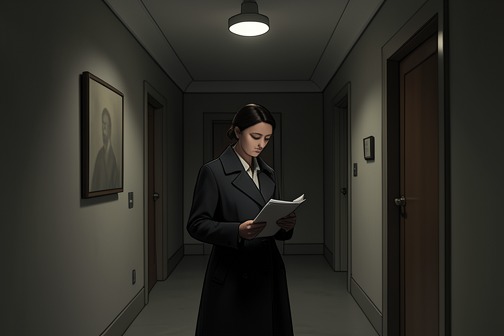
[Alice Gould](entity:character-recall-character-alice-gould-2e74f97e507b)’s undercover admission to [Nuestra Señora de la Fuentecilla Psychiatric Hospital](entity:location-recall-location-nuestra-se-ora-de-la-d143276b75fb) begins as a calculated professional deception and becomes the mechanism by which she can be detained. She enters to investigate a crime for her client, [Raimundo García del Olmo](entity:character-recall-character-raimundo-garc-a-del-377ec83dea17), relying on [Samuel Alvar](entity:character-recall-character-samuel-alvar-4a5f7bef80ea)’s advice to feign paranoia. Yet the paperwork later reveals that the hospital has processed her as an involuntary patient at her husband’s request. The investigation therefore turns on a bitter contradiction: Alice believes she has entered the institution by choice, while its official records give others power over whether she may leave.
## Assignment and Preparation
Alice’s mission is to investigate a murder and identify its perpetrator, its instigator, or both. Raimundo García del Olmo, her client, has paid her an advance and promised an equal amount if she completes the work successfully. The fee initially seemed excessive; once she understood the conditions under which she would have to investigate, she recognized why it was so high. The assignment requires her to work among people whose suffering is mental rather than visible, in a setting she finds profoundly distressing because she cannot easily bear the sight of other people’s pain.
Samuel Alvar is her accomplice and the person who knows for certain that she is mentally healthy. He advised her to pretend to be paranoid, a choice suited to an undercover role because, as Alice reasons, a person with paranoia might remain intelligent and capable of carrying out professional duties while appearing abnormal chiefly through a particular delusion. Alvar is also an intimate friend of her client and is meant to provide information about suspects. His name repeatedly occupies Alice’s thoughts: the partnership that makes her investigation possible is also a point of fixation as she enters the hospital’s uncertain world.
## Arrival and Admission
The opening image places a man and a woman in a car. As it slows, the man turns off the paved road, stops on a grassy clearing, and walks toward the edge of a rise; the woman follows. This restrained arrival precedes the more consequential threshold: Alice enters a place where her professional disguise will be read as evidence of illness. At the hospital, her composure and carefully prepared responses help sustain the role. The fact that staff do not believe she is a detective appears to serve her purpose, since questioning or taking notes can be attributed to her supposed delusions rather than to an investigation.
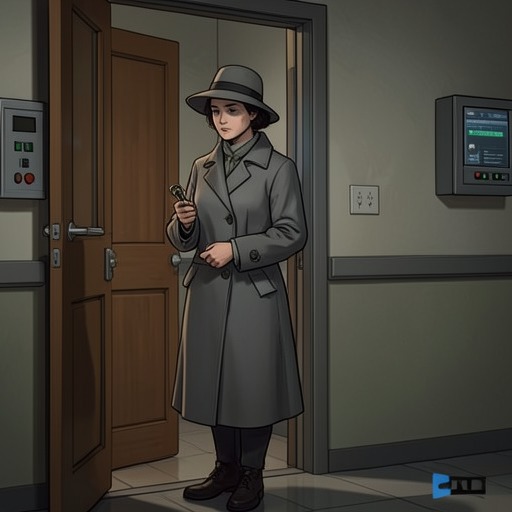
The intake process makes the role physical and administrative. When a staff member declares that Alice has been admitted and orders an object collected, she bends with a trembling hand to retrieve her white-gold lighter and hand it over. Her clothing, toiletries, handbag, and hand luggage are exhaustively inventoried and sealed. The seizure of personal effects is not incidental scenery: it marks the conversion of a visitor and investigator into a person subject to the institution’s procedures. The large women’s pavilion is divided by a corridor, with individual rooms on one side and a much larger collective dormitory on the other; Alice learns that the collective room is for the calmer residents, while other wards house people with more acute needs.
## The Investigation Inside the Institution
The hospital’s open regime gives residents relative freedom to move through its buildings and grounds. They may spend time in the bar, play cards or dominoes, walk in the garden or surrounding wooded area, attend occupational therapy, or work in workshops that make goods for sale and pay patients according to their abilities and output. Some residents may even leave the grounds and take a bus to nearby towns. This apparent latitude gives Alice room to observe and ask questions, but it does not remove the distinction between freedom of movement inside the hospital and the right to depart from it.
Alice understands that she must search among the women’s accommodation and the men’s separate sleeping quarters for the person who committed the crime or arranged it. Her surroundings repeatedly expose the costs hidden beneath the language of treatment. The hospital includes units for people in crisis, and the most severely impaired residents in the dementia ward nicknamed the Lion Cage may depend on attendants to dress and feed them, put them to bed, and help them use the toilet. Against that institutional reality, Alice’s determination to investigate is shadowed by her awareness that the people around her are not merely clues in a case but vulnerable residents living under care and supervision.
## The Legal Reversal
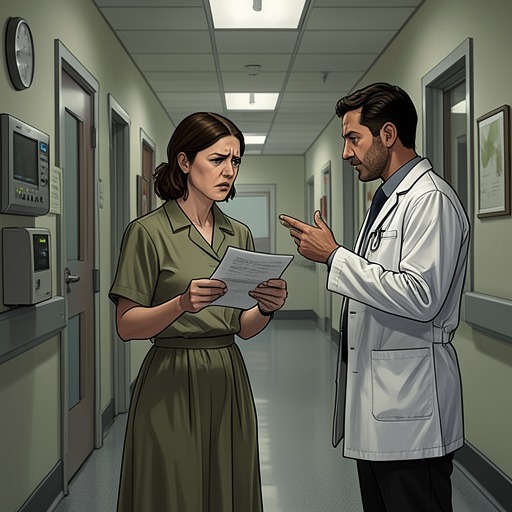
Alice’s understanding of her status collapses when the director explains that her file does not record a voluntary admission. A voluntary patient would have signed a declaration requesting treatment, accompanied by a certificate from the receiving doctor. Alice’s papers instead follow the procedure for involuntary commitment: a medical certificate from [E. Donadío](entity:character-recall-character-e-donad-o-e8b7847189d3), registered in [Madrid](entity:location-recall-location-madrid-8acd4123f416), attesting to illness and the need for confinement, together with an application from her husband, [Heliodoro Almenara](entity:character-recall-character-heliodoro-almenara-b802ccaa3548), as a relative. Alice protests that she came of her own will and is a professional detective, but the file gives her protest no power to change the basis on which she has been admitted.
She later grasps the practical consequence of the distinction. A voluntary patient can leave almost as simply as she entered; someone committed at a relative’s request on medical recommendation cannot depart at will. In a later clinical meeting, the director states that the hospital has received her as a paranoid woman accused of trying three times to poison her husband, and that it accepted her on the recommendation of a doctor and her husband’s application. The dispute is no longer only about whether Alice is pretending to be ill. It concerns how a diagnosis, a family request, and an official record can combine to determine a person’s liberty.
## Significance
The admission establishes the novel’s central uncertainty through competing accounts of Alice rather than through a simple failure of disguise. She is conducting a real investigation, and Alvar knows she is healthy; at the same time, the hospital possesses documents that describe her as ill and justify keeping her there. Her detective work depends on being mistaken for a patient, but that misrecognition becomes dangerous once the institution treats the mistaken identity as fact.
The contrast between the open grounds and the involuntary paperwork gives the episode its lasting tension. Residents may walk, work, and sometimes travel beyond the hospital, yet Alice discovers that apparent openness does not guarantee an individual’s freedom to leave. Her covert entry thus reverses its own premise: the person who came in to investigate a confinement finds herself caught inside a legal and clinical process whose authority she cannot dismiss simply by stating who she is.
Event 2
Ruipérez's Admission Interview and Preliminary Diagnosis of Alice
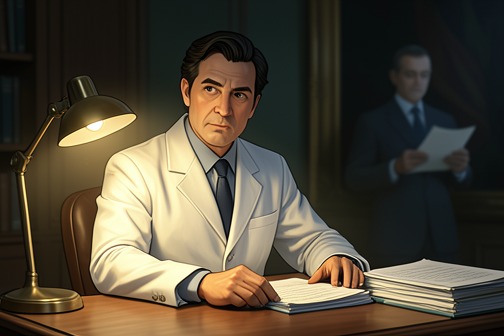
Ruipérez’s admission interview with [Alice Gould](entity:character-recall-character-alice-gould-2e74f97e507b) establishes the novel’s central uncertainty around her: she can describe her confinement with apparent clarity, yet the medical record frames that clarity as part of a potentially deceptive and delusional presentation. His provisional diagnosis of pure paranoia turns an interview into a contest over who can interpret Alice’s account—and whether intelligence and composure are signs of health or tools that make illness harder to recognize.
## The warning in the file
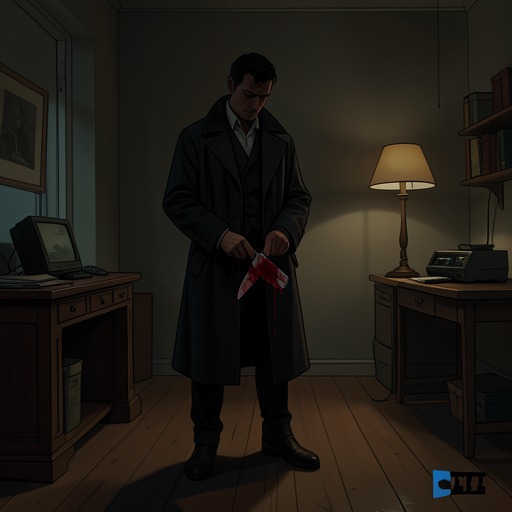
Before speaking with Alice, Ruipérez opens a private letter from [E. Donadío](entity:character-recall-character-e-donad-o-e8b7847189d3) to the absent director, [Samuel Alvar](entity:character-recall-character-samuel-alvar-4a5f7bef80ea), reasoning that the director’s vacation permits him to read it. The letter warns that Alice habitually has an answer for everything, even when answering requires a lie or contradicts something she has said before. It also describes her as unusually skilled at explaining why an earlier falsehood was necessary and why her present account should be believed. Her intelligence and her delusions, Donadío argues, work together: she may persuade inexperienced psychiatrists, while sometimes being unable to recognize that she herself is lying.
The letter therefore gives Ruipérez a framework before he has heard Alice’s case. It does not simply tell him that she lies; it cautions him that inconsistencies may arrive wrapped in persuasive explanations, and that delusion may complicate the distinction between deliberate deception and self-deception. Alice’s intelligence is consequently treated as both a real capacity and a clinical complication. The interview begins under the pressure of a prior interpretation, rather than on neutral ground.
## Alice’s account of her confinement
Ruipérez identifies himself as the director’s assistant and asks Alice whether she knows what kind of institution she has entered. She answers that it is a mental asylum. When he asks whether she understands exactly why she is there, she says she has been legally kidnapped. Her formulation casts admission not as treatment she sought, but as an imposed seizure of her liberty.
She rejects the account that she had admitted attempting suicide before a judge. Alice says she was not committed by judicial sentence: she was accused by a doctor she considers incompetent, and she denies ever confessing to E. Donadío that she had done what was alleged. The force of her denial does not settle its truth. For Ruipérez, it has to be heard alongside the warning that she can offer coherent explanations for contradictions; for the reader, it preserves the possibility that the records and Alice’s account describe sharply different versions of the same admission.
Asked why her husband, [Heliodoro Almenara](entity:character-recall-character-heliodoro-almenara-b802ccaa3548), would want her confined, Alice gives a financial and legal explanation. She claims that eliminating her would leave him as administrator of her fortune and help him have her declared a spendthrift, restricting her control over her property. She adds that his debts from poker would then be secure. The allegation is specific, but Ruipérez records it as a perfectly constructed delusional fable and writes a provisional conclusion of pure paranoia. The exchange thus places the same details in two incompatible frames: Alice presents them as a motive for her husband’s actions; Ruipérez treats the account as evidence of illness.
## Diagnosis and immediate precautions
Ruipérez’s judgment is not that Alice lacks intelligence. He considers her clearly intelligent and professionally specialized, while suspecting that her delusions strengthen a sense of superiority over those around her, including her own doctor. Donadío’s diagnosis appears increasingly accurate to him as the interview proceeds. He anticipates that Alice may behave so normally that others will believe her well, and that release would lead her to pursue an obsessive intention to attack her husband. These are Ruipérez’s predictions, not events that the interview establishes as having happened.
He also imagines how apparently admirable conduct could be used to persuade others of her sanity: she might risk her life rescuing a patient from a fire she herself had started, or pull someone from a pool after pushing them into it. His examples reveal the severity of the interpretive problem he sees in paranoia. In his view, actions may look spontaneous and compassionate while serving a deliberate effort to disprove a diagnosis; at the same time, a person may be normal in every area untouched by the obsession. The interview therefore produces no simple test by which Alice’s conduct can be read.
Ruipérez regards her as doubly dangerous because of the combination of illness and intelligence. He decides to restrict access to anything in her clothing, belongings, or toiletries that might be used to harm herself or someone else. The planned safeguards give the diagnosis immediate practical force: before the institution can establish what Alice has done or intends to do, its response already limits what she may possess. Soon after admission, Alice insists that she is a resident because her admission has just been completed, while [Montserrat Castell](entity:character-recall-character-montserrat-castell-e866aa901248) objects that she is not one yet; Alice bends down to retrieve a lighter and hands it over. The small dispute makes the transition into institutional status visible as a process being asserted and contested, not merely a settled label.
## The record and the later test of judgment
A later explanation of Alice’s file clarifies that her admission followed the procedure for involuntary cases. The paperwork included E. Donadío’s medical certificate stating that she was ill and required hospitalization, together with a request from her husband as her relative. Alice, by contrast, later insists that she entered of her own will as a professional detective. This procedural detail sharpens the original interview’s conflict: her claim of legal kidnapping is not simply contradicted by a court sentence, which she denies, but set against documents that authorized involuntary admission through medical certification and her husband’s request.
The story also supplies later grounds to take Alice’s powers of observation seriously without making those grounds a retroactive proof that every claim she made at admission was true. In a later investigation, she reasons from the two [ETA](entity:organization-recall-organization-eta-fb5f459c73b9) prisoners’ slit throats that [Ignacio Urquieta](entity:character-recall-character-ignacio-urquieta-13fa5efbf25e) could not have killed them, and reconstructs how a Basque-speaking man lured them into the basement with a promise of an old monks’ secret passage before returning with a knife. After recognizing [Remo](entity:character-recall-character-remo-8f5cc226c0e7)’s body, she says she immediately suspected the killer; she later describes the Elephant Man’s crushing attack and is asked whether she witnessed what she recounts. She also explains that she requested access to selected patient files to check who had permission to leave the hospital around the time García del Olmo was murdered.
These later episodes do not erase the interview’s ambiguity: accurate deductions about murders do not, by themselves, disprove a diagnosis, just as a diagnosis cannot by itself establish that Alice’s allegations against her husband are false. They do, however, complicate Ruipérez’s initial confidence that the warning letter and her account can be fitted into a single clinical explanation. The admission interview is decisive less because it resolves whether Alice is ill or truthful than because it establishes the terms of that unresolved struggle: her words may be evidence, symptoms, or both, while the institution’s procedures give its interpretation immediate power over her freedom.
Event 3
Alice's Admission Search and Confiscation of Personal Belongings
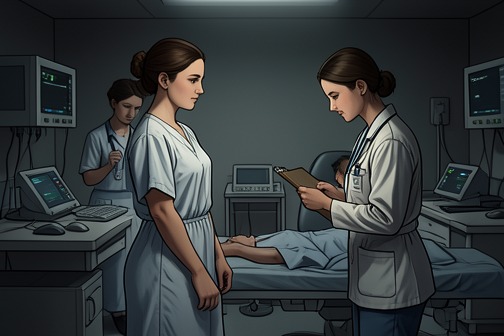
[Alice Gould](entity:character-recall-character-alice-gould-2e74f97e507b)’s admission search and the confiscation of her belongings mark the point at which entering [Nuestra Señora de la Fuentecilla Psychiatric Hospital](entity:location-recall-location-nuestra-se-ora-de-la-d143276b75fb) becomes a material loss of privacy and control. Presented as routine safeguards, the procedures take her clothing and possessions, subject her to a degrading bodily examination, and transform her appearance. Her protest cannot stop staff from declaring her a resident; the orderly process of inventory and receipts therefore carries an unmistakable coercive force.
## The Terms of Admission
Before the search, Alice is told that three experiences await her, one entertaining and the others not. When she asks to begin with the worst, the explanation turns to the removal of everything she has brought with her. After she has chosen and put on suitable clothing, she must surrender her worn clothes and all personal effects in exchange for a receipt and inventory. The list is deliberately comprehensive: watch, lighter, ring, brooch, money, and everything else. She is told that nothing personal may remain in her cell, not even cotton.
The rule makes the admission more than a change of address. Alice is not simply asked to leave valuables for safekeeping: the belongings that let her maintain her ordinary appearance and private habits are separated from her, counted, and placed beyond her immediate reach. The formal promise of a receipt gives the process an administrative neatness, but cannot soften the vulnerability built into it. The objects are named one by one, while the person surrendering them is increasingly handled as an incoming case.
## A Protest Over a Small Object
The conflict becomes visible when Alice rejects an offer of friendship from [Montserrat Castell](entity:character-recall-character-montserrat-castell-e866aa901248) and throws a piece of white gold to the floor. The object is identified shortly afterward as her lighter. The gesture is sudden and defiant, but it gives her no control over what happens next: a severe older woman enters abruptly, sees the object on the floor, and orders Alice to pick it up. Montserrat objects that Alice is not yet a resident; the reply is that she has just been admitted and is one already. Alice bends with a trembling hand and returns the lighter.
That brief exchange makes the threshold itself contested. To Montserrat, Alice has not yet crossed fully into the status of resident; to the staff member, the admission has already taken effect. The distinction is settled not by Alice’s wishes but by the institution’s declaration. The lighter, soon to be taken with the rest of her effects, becomes a small test of whether she can still determine what happens to her own property. Her anger produces a gesture, but the response turns it into compliance.
## The Bodily Search and Replacement Clothing
The staff also explain that some residents must be searched after undressing, a procedure they acknowledge can be humiliating. [Conrada Segunda](entity:character-recall-character-f1002f459a06) enters the room, inspects the contents of Alice’s suitcase, rejects what is there, and tells her to undress. The examination takes place in Montserrat’s office. It is described as exhaustive: women may be searched in both the rectum and the vagina because prohibited objects have sometimes been hidden there, including drugs, files, small weapons, or poison. The account establishes the purpose given for the search without suggesting that anything is found on Alice.
When it is over, Conrada instructs Alice to dress in the clothing provided. She wears clean but old men’s trousers, men’s socks, and low shoes. Her faded blouse has been washed so many times that she cannot tell which side is the right one; a new knitted jacket is coarse and unappealing. She keeps her own underwear, treating it as a remnant of her former life. The contrast between that private item and the replacement outfit gives the clothing change its force: a narrowly preserved possession remains against a public appearance assembled for her by the hospital.
The surrender extends beyond the clothes she wore. The count includes her clothing, the toiletries in her case, and everything in both her handbag and hand luggage; the items are sealed. The procedure makes loss legible through careful accounting, but its effects are not limited to property. At the mirror Alice is crying, and Montserrat is moved to tears as well. In less than half an hour, the elegant woman Montserrat remembers has become, in appearance, a beggar: her fine clothes are reduced to a bundle of rags, her carefully arranged hair to tangles, and her appearance seems ten years older. Without heels, she is also shorter. Montserrat closes her eyes to preserve the memory of the graceful figure who had arrived at [Teodoro Ruipérez](entity:character-recall-character-teodoro-ruip-rez-ec534aa212cf)’s office before the change overtakes it.
## Institutional Control and Its Contradictions
The search anticipates a crucial dispute over the meaning of Alice’s admission. Later, when she insists that she is not a patient but a professional detective who entered of her own will, the director distinguishes the documents for voluntary admission from those in her file. He says that her actual admission followed the involuntary procedure: [E. Donadío](entity:character-recall-character-e-donad-o-e8b7847189d3) certified illness and the need for hospitalization, while her husband, [Heliodoro Almenara](entity:character-recall-character-heliodoro-almenara-b802ccaa3548), submitted the application as her relative. The later explanation gives the earlier insistence that she is already a resident a procedural dimension. The staff’s decision to treat her as admitted was not merely a dispute about timing; it belonged to a formal process that overrode her account of why she was there.
This episode also stands in tension with the hospital’s open regime, which Montserrat later describes as allowing residents considerable freedom to move through the building and grounds, join activities, work in workshops, and sometimes go into nearby towns. Such freedom is real within the rules she outlines, but it does not erase the absolute control exercised at the point of entry. The contrast is sharpened by [César Arellano](entity:character-recall-character-c-sar-arellano-1dd2ae49c986)’s later defense of reforms associated with antipsychiatry: removing bars can be an excellent measure, he argues, but only when the infrastructure needed to support it exists. Against that debate, Alice’s admission shows that institutional openness and intimate bodily control can coexist. The search is therefore both a practical security procedure and the scene in which the hospital begins to recast a composed, self-directed woman as someone whose body, possessions, and status are subject to its authority.
Event 4
Alice's First Encounters with Residents and Search for a Suspect
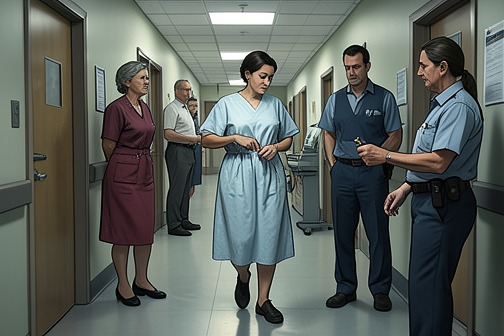
[Alice Gould](entity:character-recall-character-alice-gould-2e74f97e507b)’s first encounters at the asylum turn an assumed patient identity into an investigative method. Moving cautiously among residents, she studies the hospital’s habits and its people while seeking a man who might have written the criminal letters sent to her client, [Raimundo García del Olmo](entity:character-recall-character-raimundo-garc-a-del-377ec83dea17). Her first suspect is [Carolo Bocanegra](entity:character-recall-character-carolo-bocanegra-61e3854f7d4b), whose silent manner proves less straightforward than it appears; the search soon expands from suspicious handwriting to the hospital’s routines, records, and deaths.
## Admission into a borrowed identity
Alice’s arrival requires her to perform the role she has adopted. When [Montserrat Castell](entity:character-recall-character-montserrat-castell-e866aa901248) objects that she is not yet a resident, Alice insists that her admission has just been issued. She bends down, retrieves a lighter from the floor with a trembling hand, and returns it to the person asking for it. The small act makes her new status visible: she is not merely visiting the institution but has entered its daily life as one of its patients.
The disguise has a practical purpose. Alice has accepted García del Olmo’s commission to investigate the criminal letters directed at him. He has given her an advance check and promised an equal sum if she completes the work successfully; the scale of the fee, which first seemed excessive, now feels proportionate to the difficulty and strangeness of her assignment. The asylum is both the setting of the investigation and the environment she must learn to navigate without exposing why she is there.
At first Alice tries to speak as little as possible, so that she will not betray the symptoms of the illness she is feigning. In the [Central Hall for the Forsaken](entity:location-recall-location-32baeb966c29), women and men enter through separate doors, residents notice the newcomer, and she keeps her eyes lowered rather than inviting conversation. Her caution is deliberate, but it also makes observation her first instrument: she watches before she joins in.
## Learning the ward and its residents
Montserrat explains that the hospital has had an open-regime policy for only a few years. Residents can move with relative freedom through the buildings and grounds; some gather at the bar for dominoes, brisca, or parchis, while others walk in the garden, explore the extensive wooded area, attend occupational therapy, or work in workshops that function like small industries. The objects produced there are sold, and residents receive wages that vary with their abilities and output. Some can even take a bus to nearby towns, especially for local festivities, although Montserrat cautions that exceptions to this general freedom are numerous.
This arrangement gives Alice room to observe, but not the security of a simple, uniformly open institution. The most severely impaired residents are kept in the [Dementia Ward Known as the Lion Cage](entity:location-recall-location-565324b4175a), where they may need staff to dress them, feed them, put them to bed, and help them maintain basic routines. The contrast between movement through much of the hospital and intensive dependence in that ward makes clear that residents’ access and treatment differ sharply. Alice’s search must therefore account not just for individual personalities but for a complicated landscape of permissions and restrictions.
In the hall, a resident nicknamed the Elephant Man is nearly struck by a fool who has been reprimanded for tormenting others. The Elephant Man remains standing and does not defend himself. Alice recognizes him from the previous evening’s dinner, and a recently arrived man explains that the resident who struck him is unlikely to repeat the act if punished. He then asks to sit beside her and introduces himself as [Ignacio Urquieta](entity:character-recall-character-ignacio-urquieta-13fa5efbf25e). Their exchange quickly unsettles the categories Alice has brought with her: Ignacio describes himself as a particularly peculiar patient because he recognizes and admits that he is mad, then suggests that Alice herself is not ill. She confirms that she is not.
## Observation turns into suspicion
Alice’s search begins with a profile rather than a name. Among the hospital’s population, she is looking for a man around fifty, athletically built, and able and willing to write. That combination narrows her attention toward someone whose outward capabilities might be obscured by the institution’s labels. Her encounter with Carolo Bocanegra makes the problem of interpreting appearances especially concrete.
When Alice asks whether Carolo can speak, Ignacio answers that a mutist is someone who does not talk. Carolo takes out the oilcloth notebook he carries in his pocket and writes, in broad strokes with an orange marker, that he can speak but does not feel like doing so. Alice is startled, though she suppresses both laughter and comment. The notebook does not prove that Carolo wrote the letters, but it shows that he can communicate in writing and keeps a distinctive record of some kind.
At the meal, Alice continues to observe residents’ behavior, including the contrast between those who refuse food from lack of appetite and those who resist swallowing until staff patiently persuade them. The variety of her impressions does not distract her from the different-colored notes covering Carolo Bocanegra’s Oilcloth Notebook. She gives Carolo the private investigative nickname the False Mutist and places him on her first list of suspects as a possible author of the criminal letters to García del Olmo. Her inference rests on a suggestive conjunction—his concealed ability to write and his multicolored notes—not on proof. The distinction matters: Alice has identified a plausible lead, not established guilt.
## An investigation widened by the hospital
As the inquiry develops, Alice’s method moves beyond first impressions. She asks the director for the records of selected residents because she needs to know which had permission to leave the hospital on the dates when García del Olmo was murdered. She sees only one of the files she wants before the police commissioner later asks for it to be brought to the office. The records offer a way to test opportunity against movement outside the grounds, turning the hospital’s open-regime rules into evidence rather than mere background.
Her later reasoning about other deaths also shows how the initial practice of close observation becomes a broader investigation. She notes that two victims were killed by having their throats cut, then infers that someone stopped them while they were escaping, spoke Basque, and offered help. The killer led them into the basement labyrinth with the plausible story of a secret passage left by the old friars, promised to fetch a lantern, and returned with a knife. When Alice recognizes that another dead man is [Remo](entity:character-recall-character-remo-8f5cc226c0e7), she says that she suspected the killer from that moment. In the questioning that follows, she explains the Elephant Man’s crushing attack as repeated falls of his 160-kilogram body onto the victim, like the action of an actual elephant. The hospital encounters that began as a search for a letter-writer have become a way to connect behavior, physical evidence, and access to place.
The conditions of Alice’s own admission ultimately complicate the agency she thought she had secured. When she insists that she entered voluntarily as a professional detective, the director points out that her file does not contain the procedure for voluntary treatment. Instead, it records a medical certificate from [E. Donadío](entity:character-recall-character-e-donad-o-e8b7847189d3) stating that she was ill and needed admission, together with an application from her husband, [Heliodoro Almenara](entity:character-recall-character-heliodoro-almenara-b802ccaa3548), as her relative. The discrepancy reveals that the institution has formally classified her as an involuntary patient, despite the investigative purpose she asserts. Her first encounters thus begin with a carefully managed disguise, but the search takes place inside a system that can reinterpret her presence and constrain her freedom.
Event 5
Alice's Clinical Interview and Psychological Tests with Arellano

Alice’s clinical interviews and psychological tests with [César Arellano](entity:character-recall-character-c-sar-arellano-1dd2ae49c986) place her between two competing readings: she is an intelligent, perceptive woman whose illness remains undiagnosed, and a patient whose normality must be established by examination. The episode moves from observation and questions about what Alice knows—even what she does not know about herself—to formal tests and a broad medical work-up. Its central tension is that the more closely the hospital investigates her, the less its procedures can be mistaken for a settled diagnosis.
## Observation and the clinical interview
The hospital’s initial plan is to keep Alice under observation until the responsible physician arrives. During that interval, staff are to collect information and make it available so that the physician can decide on appropriate medication. The stated sequence matters: observation and data-gathering come first, while treatment is deferred until a decision-maker can assess the material. Alice is therefore subject not only to conversation but to a process designed to turn her conduct and condition into clinical evidence.
The interview reaches beyond a straightforward account of symptoms. Alice is asked to make two declarations: to say what she knows and what she does not know about [Alice Gould](entity:character-recall-character-alice-gould-2e74f97e507b). The question treats the limits of her own knowledge as part of the inquiry, bringing the subconscious and conscious mind into the terms of the conversation. Rather than supplying a diagnosis, the exchange makes Alice’s account itself something to examine: what she can report, what remains inaccessible to her, and how the two might relate.
One doctor’s response captures the unsettled impression she makes. He falls silent and looks at her with a mixture of compassion and admiration, seeing a singular woman who is intelligent, sensitive, and refined, yet affected by an illness that has not been diagnosed. The pause does not resolve the contradiction between apparent ability and suspected illness. It registers it. Alice’s qualities elicit recognition and sympathy, but they do not, in the clinical setting, settle the question of her condition.
## Tests and their purpose
César Arellano commissions [Montserrat Castell](entity:character-recall-character-montserrat-castell-e866aa901248) to administer tests to Alice. Their stated purpose is to establish experimentally that Alice is not intellectually deficient. The framing is pointed: the test takes place in a mental hospital described as full of people with deficiencies, and Alice is told not to forget that setting. The examination is thus not merely a general measure of ability; it addresses a specific question about whether she belongs to the category presumed of the institution’s patients.
Montserrat later brings the results into Arellano’s office, where he receives her in a bad mood. The surviving account preserves only fragments of their exchange, including a question about deterioration with age and a reply indicating agreement; it does not provide enough to reconstruct the results or the full clinical interpretation. What it does establish is a chain of responsibility: Arellano orders the testing, Montserrat conducts it and reports back, and the results become material for the doctor’s judgment. The tests contribute evidence without, in the available account, producing a definitive diagnosis.
## Repeated examinations and medical scrutiny
The assessment extends beyond the psychological tests. Alice undergoes urine and blood examinations; her blood pressure is measured before and after meals and before and after a scheduled bout of strenuous exercise. The functions of her liver, heart, and lungs are measured and monitored, and she eventually receives an electroencephalogram. These procedures widen the inquiry from conversation and intellectual capacity to bodily indicators and neurological examination.
The range and repetition of the checks give clinical observation a concrete routine. Alice’s condition is approached through measurements taken under different circumstances, including around meals and exercise, rather than through a single interview alone. Yet the account does not say that any one result explains her behavior or identifies a disease. The accumulation of tests signals an effort to gather and compare data; it should not be mistaken for evidence that the diagnostic question has been answered.
## Repetition without resolution
The interviews associated with Alice and Arellano take place three or four times a week. Their frequency makes the clinical relationship sustained rather than a single consultation, and places repeated conversation alongside the laboratory tests and physical monitoring. Even with this continuing attention, the narrative describes Alice’s illness as still undiagnosed. The episode therefore distinguishes the thoroughness of examination from certainty of conclusion: a great deal can be observed, measured, and discussed while the meaning of the findings remains open.
That distinction gives the event its significance in Alice’s treatment. Her intelligence and sensitivity are plainly noticed, while the hospital continues to ask whether she is deficient and to investigate her condition across psychological and physical domains. Neither admiration nor testing ends the uncertainty. The clinical process produces more scrutiny and more recorded evidence, but the account leaves the diagnosis—and the final interpretation of Alice—unsettled.
Event 6
Ignacio's Rain-Triggered Crisis

Ignacio’s Rain-Triggered Crisis is the moment when [Alice Gould](entity:character-recall-character-alice-gould-2e74f97e507b) sees [Ignacio Urquieta](entity:character-recall-character-ignacio-urquieta-13fa5efbf25e)’s fear of water become an unmistakable physical crisis. As he races across the hospital grounds and collapses in the rain, Alice connects his attack to a condition [Teodoro Ruipérez](entity:character-recall-character-teodoro-ruip-rez-ec534aa212cf) had described and rereads the small accommodations that had concealed it. The scene turns an apparently composed resident’s routines into clues to the effort required to keep water out of sight and reach.
## The Crisis on the Grounds
Before Ignacio appears, Alice has been resting beside an oak, half asleep for perhaps an hour. Clouds have gathered, some seeming ominous, and she decides to get up and continue walking. The calm of this pause gives way abruptly: Ignacio passes her in a wild, breathless rush, sweating, groaning, and with disturbed eyes. He does not see her and nearly knocks her down. His running is not the measured trot Alice has seen before; it looks like a desperate attempt to reach safety.
As he descends a slope, Ignacio trips and rolls several metres. He springs up immediately and continues running. His urgency is so great that he takes the longer route around the bar, chapel, and family units, although a shorter path back to the building passes the garden, workshops, and sports area. The route is not simply a poor choice made in haste: once Alice understands the danger water represents to him, the avoidance of the swimming pool along the shorter way makes his detour legible.
Rain begins as Ignacio takes this circuitous route. He falls to the ground as if in an epileptic seizure. The rain is not incidental weather in the scene: it is the trigger that turns his flight into collapse. The contrast between his frantic movement and his sudden helplessness makes visible the force of a fear that his ordinarily controlled public manner had kept hidden.
## Alice Recognizes the Pattern
People accompanying Ignacio reach Alice as he lies collapsed. Their uncertain family roles are reflected in the narration: one is described as his supposed brother, and the others as a possible father and wife, or an imagined sister-in-law. One of them expresses distress at seeing him like this. The scene does not establish these relationships as fact; their uncertainty forms part of the disorientation around Ignacio’s crisis.
Alice recalls her first interview with Teodoro Ruipérez. He had told her about a patient with a phobia of water who might vomit, develop a fever or skin eruptions, and even faint upon seeing, hearing, or touching water. Alice now recognizes that the case Ruipérez described belongs to Ignacio, whom she had regarded as one of the most balanced and correct residents. The recollection changes the meaning of the attack: what had seemed an inexplicable burst of panic is connected to a specific, previously discussed condition.
The recognition also changes Alice’s interpretation of ordinary details. Ignacio’s long absences coincide with rainy days. In the dining room, he sits with his back to the other patients, avoiding the sight of their water jugs and glasses. At his table, only wine and soda are served. Each practice had appeared as an isolated peculiarity or privilege; taken together, the details show a daily arrangement built around avoiding water. The rain exposes the vulnerability that this arrangement usually keeps out of view.
## Avoidance, Exposure, and the Unanswered Question
The crisis makes clear that Ignacio’s fear shapes not just his reaction to rain but his movement through the hospital. The longer route around the pool is the episode’s sharpest example: the fastest return to shelter is less important than avoiding a place associated with water. His choices had already organized his absences and dining habits; under pressure, that same avoidance governs his attempt to reach refuge. The attack therefore reveals a pattern rather than a single unexplained collapse.
After recognizing the pattern, Alice turns to [Cosme el Hortelano](entity:character-recall-character-cosme-el-hortelano-3709e2335790) and asks who had once thrown a bucket of water at Ignacio’s feet. That question points toward an earlier encounter in which water was deliberately brought close to him. The available account identifies neither the person responsible nor the circumstances or consequences of that act, so the crisis does not resolve what happened. It instead redirects Alice’s attention from the visible symptoms to the history behind them.
## Narrative Significance
The episode depends on delayed recognition. Readers first encounter a frightening spectacle: Ignacio runs blindly, falls, resumes his flight, and collapses when the rain starts. Only afterward does Alice’s memory of Ruipérez’s explanation gather the clues into a coherent account. This structure makes the scene both an emergency and an act of interpretation, as Alice discovers that a person she had considered exceptionally balanced has been living within strict, largely unobtrusive limits.
Rain functions as the force that defeats those limits. Ignacio’s carefully managed distance from water can explain his route, his place at the table, and his absences, but it cannot protect him once the weather changes. Alice’s recognition is consequential because it links the attack to a broader, concealed pattern and raises a further question about the earlier bucket incident. The scene thus reveals the reality of Ignacio’s phobia while leaving its precipitating history unresolved.
Event 7
Raimundo García del Olmo’s Father’s Murder Case
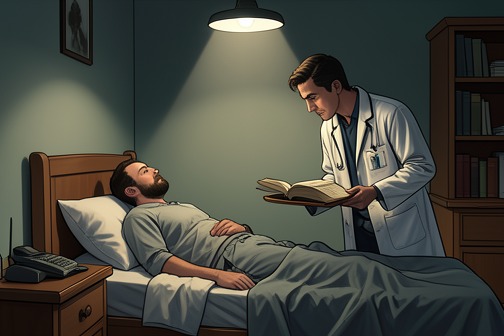
[Raimundo García del Olmo’s Father’s Murder Case](entity:event-recall-event-e16176e29a51) is the investigation surrounding the death of [Raimundo García del Olmo](entity:character-recall-character-raimundo-garc-a-del-377ec83dea17)’s father and the weekly letters Raimundo later received. Its central tension is between an established family tragedy and a suspicion that was never presented as proof: police wondered whether Raimundo had ended his father’s suffering, while [Alice Gould](entity:character-recall-character-alice-gould-2e74f97e507b) argued that this was not what happened. Her inquiry then followed a separate but connected trail into the hospital, where handwriting and stationery pointed to a confined patient and to access to office materials.
## The Death and the Police Suspicion
More than two years before Alice described the case, Raimundo returned from a specialist congress in [Paris](entity:location-recall-location-paris-c02b439ce220) and found his father dead. The account establishes the circumstances of discovery but does not give the father’s name, the precise date, or the physical evidence surrounding the death. The father had stomach cancer, suffered terrible pain, and was believed to have only a few months to live because the illness was irreversible.
Those circumstances shaped the police suspicion. Investigators considered whether Raimundo, knowing how much his father suffered and understanding that recovery was impossible, might have advanced his death out of compassion. The possibility arose from the father’s condition and the son’s knowledge of it; the evidence in Alice’s account does not establish that Raimundo killed him. Alice expressly rejected the suspicion, distinguishing the police’s fear from what she said had actually occurred.
The case therefore rests, in this telling, on a consequential distinction: a motive that investigators could imagine was not the same as proof of an act. The father’s pain and approaching death made the hypothesis intelligible to the police, but Alice’s account supplies no confirmation that Raimundo assisted his death. Nor does it specify what other evidence the police examined. The limits matter: the suspicion is reported, and denied, rather than resolved through a presented forensic finding.
## The Letters and Their Trail
Around the period of the case, Raimundo began receiving letters every week. He commissioned Alice to investigate where they came from. Her inquiry shifted the problem from the circumstances of the father’s death to the origin of the correspondence: who was writing to Raimundo, and how could the writer obtain the paper used for the letters?
Alice says that handwriting examination led her to conclude that the writer was psychotic and confined in the hospital. This finding identifies the suspected author by condition and institutional situation, not by name in the account presented here. It also makes the hospital more than the setting of Alice’s inquiry: it becomes the place from which the letters appear to have originated, even though the ordinary paper supplied to patients did not match the paper used.
The paper offered a more specific clue. Alice determined that it was office stationery, not the paper distributed to patients. It was the same kind of letter paper used by [Samuel Alvar](entity:character-recall-character-samuel-alvar-4a5f7bef80ea), except that the top had been cut away with scissors, removing the hospital’s name and address from the letterhead. That alteration concealed the stationery’s printed identification, but, in Alice’s reasoning, did not make the paper ordinary patient stationery. She recognized the match by comparing it with a letter she had seen.
The clue narrows the question without answering every part of it. It supports Alice’s claim that the letters were written by someone confined in the hospital and that the paper came from its offices; it does not, by itself, identify who supplied or handled the paper. The excerpt does not disclose the letters’ full contents or establish a final account of the writer’s access. Alice’s investigation thus exposes a trail and an institutional connection while preserving a gap between tracing materials and proving authorship beyond the handwriting conclusion she reports.
## Alice’s Investigation and the Records
Alice’s work also involved hospital files. She asked the director to let her examine the records of certain residents because she needed to know which had been permitted to leave the hospital on the dates when García del Olmo was murdered. She says that she had an opportunity to see only one of the relevant files, and that opportunity came when the police commissioner requested that it be brought to the office.
The records inquiry shows how Alice tried to turn a broad suspicion into a checkable question about access and opportunity. The files could indicate who had permission to be outside at relevant times; they could not, merely by existing, establish that any person had committed the crime. Alice’s account gives no list of the residents, no dates, and no conclusion about what the single file showed. It therefore records a method and a restriction, not a completed identification of a culprit.
## The Disclosure to Alvar
Alice lays out the delicate police suspicion while speaking to Samuel Alvar, who asks her to continue. Her frustration is sharpened by the fact that she believes he already knows the case: she asks how he could be unaware that Raimundo found his father dead on returning from the Paris congress, and challenges him over the questions he is putting to her. Alvar remains impassive, and Alice says she will not continue until he explains why he is asking about matters she believes he knows as well as she does.
The exchange frames the case as both an investigation and a dispute over knowledge. Alice is not simply furnishing Alvar with an account; she is insisting that he acknowledge the information already available to him, including the police’s suspicion and her own investigation of the letters. Her testimony connects the father’s death, Raimundo’s commission, and the hospital’s paper trail, but the available account stops short of naming the letter-writer or resolving the original suspicion with independent proof. The case’s significance lies in that unfinished evidentiary chain: a son was suspected because of his father’s suffering, while Alice’s later clues pointed toward a different, still incompletely identified source of trouble.
Event 8
Alicia’s False-Identity Admission to Investigate a Case
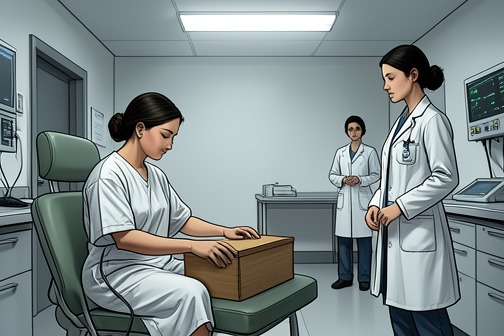
[Alicia’s False-Identity Admission to Investigate a Case](entity:event-recall-event-339457d03abe) is the operation through which [Alice Gould](entity:character-recall-character-alice-gould-2e74f97e507b) entered a psychiatric hospital under the identity of a patient while concealing her work as a professional detective. She did not merely disguise her purpose: she learned how to perform a prescribed form of paranoia and helped construct the admission paperwork that made her confinement appear involuntary. The case’s defining reversal is that Alice’s account of a voluntary investigation collided with an official file that described her as someone whose admission had been medically certified and requested by her husband.
## Motive and Cover Story
Alice’s stated objective was to investigate a criminal case for [Raimundo García del Olmo](entity:character-recall-character-raimundo-garc-a-del-377ec83dea17). She reminded [Samuel Alvar](entity:character-recall-character-samuel-alvar-4a5f7bef80ea) that Raimundo’s father had been found dead by his son more than two years earlier, when he returned from a specialist congress in [Paris](entity:location-recall-location-paris-c02b439ce220). Alice presented that death as the reason she needed to be inside the institution, where she believed the investigation could be conducted. Her disguise therefore required more than silence about the case: she had to be accepted by doctors and residents as a patient, and to behave accordingly.
According to Alice, Alvar’s letter had made that concealment a condition of her admission. No doctor or patient was to know her real purpose, and she was to conduct herself as a patient. The letter directed her to study a manual on forms of paranoia by Arthur Hill, published in Spanish by Editorial Coloma, and learn the particular variety she was meant to simulate. Alice said she followed the instructions, including the description of a chronic, systematized delusion resistant to logical argument. The diagnosis she performed was not an improvised disguise but a studied role, prepared to make her presence in the hospital credible.
She also described how the invented delusional story took shape. After thinking that someone had tried to poison her a second time, she considered this a useful beginning for a fuller account of paranoid illness. In her explanation, the story needed an ending: her husband, [Heliodoro Almenara](entity:character-recall-character-heliodoro-almenara-b802ccaa3548), had supposedly contrived to have her legally confined in a psychiatric hospital. The investigative plan thus depended on a narrative of persecution that could pass as illness while also explaining why she had entered the institution.
## The Admission on Paper
When Alice insisted that she had entered of her own free will, Alvar challenged her with the contents of her file. He distinguished the procedure for voluntary admission, which would have required Alice’s own signed declaration and an admission certificate from [Teodoro Ruipérez](entity:character-recall-character-teodoro-ruip-rez-ec534aa212cf), from the procedure recorded in her case. The file instead contained a medical certificate from [E. Donadío](entity:character-recall-character-e-donad-o-e8b7847189d3) stating that she was ill and needed confinement, together with a request from Heliodoro, identified as her closest relative, addressed to Alvar as medical director.
Alice answered that she knew the procedure because she herself had drafted her husband’s request and obtained his signature without his understanding what it was for. She also declared E. Donadío’s medical report false. The documents therefore did not simply expose a plan imposed on Alice by her husband: by her own account, she had helped produce the appearance of involuntary commitment as part of her cover. Yet that explanation did not dissolve the institutional fact Alvar was pointing to. In the hospital’s records, her admission had followed the involuntary process, not the voluntary one she claimed as her intention.
A further discrepancy concerned who had brought her to the hospital. Alvar raised the signature that appeared to accept responsibility for the expenses of a paying patient and referred to Heliodoro accompanying her on the day she was admitted. Alice denied that her husband had brought her. She said that her client, Raimundo García del Olmo, had accompanied her instead, and that she had expected to find Alvar at the hospital but encountered a substitute. That absence, she explained, made the investigation more difficult because she would have to proceed without his help.
## Living the Patient’s Role
The performance had to continue beyond the documents. Alvar had advised Alice to obey the regulations strictly and avoid distinguishing herself from the other residents; when he asked whether she wanted him to stay while she went to bed, she nodded. Such small exchanges belong to the practical texture of the disguise: she had to accept the ordinary routines and attentions attached to the patient identity she was maintaining.
The hospital’s open regime gave that identity a particular setting. [Montserrat Castell](entity:character-recall-character-montserrat-castell-e866aa901248) explained that residents could move with relative freedom through the building and grounds, spend time in the bar, play games, walk in the garden or extensive wooded area, attend occupational therapy, or work in workshops that made goods for sale and paid residents according to their abilities and performance. Some could travel by bus to nearby towns. This was not unrestricted freedom, and exceptions remained numerous, but the institution’s everyday life was more varied than a simple image of locked confinement. Alice’s task was to inhabit that environment convincingly while pursuing an investigation hidden from those around her.
The placement of residents also gave her entry a social dimension. At one meal, [Rómulo](entity:character-recall-character-r-mulo-de5c3d33411a) accompanied the [Niña Oscilante](entity:character-recall-character-ni-a-oscilante-ee84b511de5c) and the [Hombre Elefante](entity:character-recall-character-hombre-elefante-d00fb98f18a8), while Alice was seated at a table in the far corner. The narrator later indicates that the placement was not accidental, though the reason is not established in this evidence. Alice entered a world in which patients could be assigned relationships of care as well as positions within institutional routines; her false identity required her to participate in that world, not merely observe it from outside.
## Exposure and Significance
The plan’s central contradiction surfaced in Alice’s confrontation with Alvar. She asserted that she was not his patient, that she had come voluntarily, and that she was a professional detective. He answered not by accepting her account but by reading the administrative status documented in her file. Her explanation then exposed the concealed mechanics of the operation: the supposedly involuntary request had been drafted by Alice, the medical certification was, she said, forged, and the client rather than her husband had accompanied her to the hospital.
The admission consequently remains double-edged. Alice describes herself as the author of a deliberate investigative disguise, but the hospital’s procedures give that disguise real force: her file records involuntary confinement, and she is subject to the identity the paperwork establishes. The arrangement that was meant to secure access to the case also places her inside an institution whose doctors can treat her as a patient rather than as an investigator. The event turns on the unstable boundary between a role she chose to perform and a status others have the authority to enforce.
Event 9
Alicia’s Break with Samuel Alvar and Restraint

Alicia’s break with [Samuel Alvar](entity:character-recall-character-samuel-alvar-4a5f7bef80ea) is the point at which her undercover account collides with the hospital’s paperwork and power to confine her. She insists that she entered voluntarily as a professional detective, following Alvar’s instructions to simulate paranoia; he counters that the documents record an involuntary admission requested by her husband and supported by a medical certificate. Their dispute over what happened becomes a dispute over whether her own testimony can be trusted—and ends with Alvar ordering attendants to seize her.
## The admission and its competing accounts
The conflict begins with a divide between Alicia’s understanding of her presence in the asylum and the status assigned to her there. Earlier, when [Montserrat Castell](entity:character-recall-character-montserrat-castell-e866aa901248) remarked that Alicia was not yet a resident, Alicia insisted that she was: her admission had just been issued. The small exchange anticipates the larger contradiction. Alicia regards herself as an investigator who entered by agreement; the institution can treat her as a patient admitted under a different procedure.
In the confrontation, Alicia identifies herself as [Alice Gould de Almenara](entity:character-recall-character-alice-gould-de-alme-0640b4285493) and challenges Alvar to recognize her. She says that a letter from him had made her admission conditional on keeping its real purpose secret from doctors and patients and behaving as a patient. According to her account, Alvar instructed her to study a manual about forms of paranoia and learn the symptoms of the type she was to feign. She says she followed those instructions, including presenting a chronic, systematized delusion resistant to logical argument. Her case is not merely that she has been misunderstood: she claims that the conduct now treated as evidence of illness was deliberately performed as part of their plan.
Alvar answers by shifting the dispute from intention to procedure. He explains that a voluntary admission would have required Alicia’s signed declaration that she wanted treatment, together with a certificate from [Teodoro Ruipérez](entity:character-recall-character-teodoro-ruip-rez-ec534aa212cf) admitting her. That, he says, is not what her file contains. Instead, it records the procedure for involuntary cases: a certificate from [E. Donadío](entity:character-recall-character-e-donad-o-e8b7847189d3) stating that she was ill and needed to be hospitalized, and an application by her husband, [Heliodoro Almenara](entity:character-recall-character-heliodoro-almenara-b802ccaa3548), as her relative. The documents do not settle what Alicia believes she was doing, but they give the institution a formal basis to keep her there.
## The collapse of trust
Alvar’s challenge is not simply that Alicia’s account conflicts with the file. He asks how he can know whether she is telling the truth now or was telling it before. His question exposes the trap created by her claimed disguise: if the performance succeeded, her present denial can be read as another symptom; if she is telling the truth, the earlier presentation has nevertheless helped establish the case against her. Alicia responds angrily that her earlier declarations were false, but cannot make the contradiction disappear merely by insisting on it.
The difference in their manner deepens the break. Alicia becomes increasingly furious; Alvar listens without losing his composure and answers in a calm, gentle voice. He invokes a statement she made to Ruipérez on admission, when she had said that she was docile and would do whatever she was told. He urges her to be consistent with that promise and cooperate with the doctors’ effort to restore her health. His appeal treats the recorded patient as the authority on what she should now do. To Alicia, it denies the identity she is trying to reassert: a detective who came of her own accord, not a woman seeking treatment.
She strikes Alvar across the face, interrupting him. He does not visibly lose control, though his face pales slightly. The blow makes the rupture bodily and unmistakable, but it does not give Alicia control of the room. She continues to challenge Alvar’s judgment and accuse him of failing to recognize what is happening around him. In the middle of her denunciation, she fails to notice two attendants who have come up behind her.
## Restraint and the reversal of the trap
The attendants seize Alicia by the arms. Alvar orders them to take her away; she abruptly falls silent and does not struggle as they carry her from the office. Ruipérez appears through another door after they have taken her out. The restraint follows directly from the confrontation, converting a dispute about the legitimacy of her admission into an immediate exercise of institutional force.
The chapter that follows names this predicament as a trap. Alicia is placed in a straitjacket, her long sleeves tied behind her back and her hands crossed in her lap. The restraint itself is not what occupies her most: she remains fixed on the conviction that she is being held involuntarily, illegally, and against reason. She recognizes the bitter reversal that what she had presented as a lie has become true in practice. Her anger is mixed with shame that she helped bring about her own confinement by trusting the arrangement she says Alvar had proposed.
Later, reflecting on the difference between voluntary and involuntary admission, Alicia identifies the practical consequence that the office argument had made visible. A voluntary patient could leave with relative ease; a patient admitted at a family member’s request on medical advice could not simply decide to go. She concludes that the more complicated procedure was used precisely to prevent her departure. In her reconstruction, [Raimundo García del Olmo](entity:character-recall-character-raimundo-garc-a-del-377ec83dea17) arranged the confinement with Alvar’s complicity, while she herself supplied the unwitting cooperation that made the trap possible. She believes the criminal investigation offered as her reason for entering concerned a nonexistent crime, although at this stage she does not understand the reasons behind the arrangement.
## Significance of the confrontation
The episode turns on a distinction between a person’s account of consent and the institutional record that governs her movement. Alicia’s assertion that she came voluntarily is met not with an investigation of her claim, but with documents that classify her as involuntarily admitted and a demand that she behave as a patient. Her claimed deception makes the evidence radically unstable: the same performed symptoms that she presents as proof of collaboration can be used to discredit her protest.
The confrontation also makes Alvar’s authority concrete. He can define the file, interpret Alicia’s anger as part of her illness, and summon attendants to enforce his decision. Alicia’s slap briefly interrupts his speech, but the attendants’ grip and the straitjacket determine what happens next. The decisive reversal is therefore not that she discovers every motive behind her detention; she does not. It is that her earlier story of unlawful confinement, offered as a false account of her situation, now describes the condition she experiences. Her break with Alvar marks the point where the investigation she thought she controlled becomes inseparable from the question of whether she can leave.
Event 10
Doctors’ Consultation Finds Alicia Has Both Paranoia and Feigned Symptoms
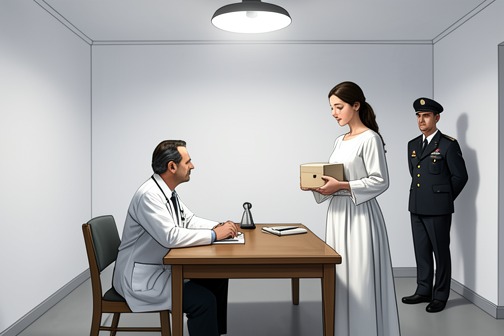
The doctors’ consultation is the point at which [Alice Gould](entity:character-recall-character-alice-gould-2e74f97e507b)’s apparent choice between genuine illness and deliberate deception is recast as a double condition. In [Samuel Alvar](entity:character-recall-character-samuel-alvar-4a5f7bef80ea)’s office, Alvar, [Teodoro Ruipérez](entity:character-recall-character-teodoro-ruip-rez-ec534aa212cf), and [César Arellano](entity:character-recall-character-c-sar-arellano-1dd2ae49c986) listen to a recording of Alice’s first account of herself on the day she was admitted, then weigh her recorded words against her clinical examination and behavior. The result is not a simple verdict that she is either ill or pretending: Alvar argues that authentic paranoia and a feigned version coexist, with the latter serving the former.
## The consultation and the record
The meeting takes place on a Wednesday, as planned, before the doctors’ meeting. Ruipérez begins by reviewing his role in Alice’s admission. Her symptoms had seemed clear to him and consistent with the report from her former private physician, [E. Donadío](entity:character-recall-character-e-donad-o-e8b7847189d3). He therefore referred her to the head of Clinical Services, Arellano, for further study and sent him a note describing what he understood to be pure paranoia, without any other appreciable syndrome. That initial formulation establishes the problem the consultation must revisit: whether Alice’s presentation can be explained by one diagnosis alone.
The record of admission complicates any account of Alice as a patient who freely chose treatment. When she insisted that she had entered voluntarily and was a professional detective, the director explained that the file followed the procedures for involuntary admission. It contained a medical certificate from E. Donadío, a physician registered in [Madrid](entity:location-recall-location-madrid-8acd4123f416), attesting to illness and the need for hospitalization, as well as an application from her husband, [Heliodoro Almenara](entity:character-recall-character-heliodoro-almenara-b802ccaa3548), as her relative. Those documents do not themselves settle whether Alice is ill, but they make the consequences of the doctors’ judgment concrete: her own account of why she is in the hospital conflicts with the official basis on which she was admitted.
The institution’s open regime adds another distinction to that conflict. [Montserrat Castell](entity:character-recall-character-montserrat-castell-e866aa901248) explains that patients can move with relative freedom around the building and grounds, attend occupational therapy, work in workshops for wages, or, with permission, travel by bus to nearby towns. Such liberty within the hospital does not make admission voluntary. The consultation takes place against that tension between visible freedom of movement and a file that classifies Alice’s confinement as involuntary.
## Evidence and competing interpretations
Ruipérez’s first conclusion is supported, in his view, by the clarity of Alice’s symptoms and their agreement with E. Donadío’s report. Arellano’s examination does not simply reproduce that conclusion. Asked about the tests he administered, he reports that their results are negative and that Alice has no psychomotor disorders. These findings narrow what the doctors can claim from the examination: they do not supply evidence of psychomotor disturbance, but neither do they, on their own, decide between paranoia and simulation.
Alvar approaches the case with particular concern because he regards Alice as a potential poisoner and says that the possibility has held his interest from the first day. He also contests Arellano’s description of her conduct as free of complaint. Alvar points to the fact that by the fifth week of hospitalization a man had died at Alice’s hands. The consultation thus places behavioral evidence beside clinical findings, but the doctors do not treat those categories as interchangeable. Alvar’s accusation carries weight in the discussion, while the reported negative test results remain a separate part of the record.
Alvar’s account of Alice’s belief gives his objection its diagnostic shape. He says that she persistently thinks she is searching for the murderer of an elderly man named García del Olmo. In Alvar’s view, she intends to identify and denounce the killer, and, if the court does not take the case from her, to administer justice herself. He compares this projected course of action with that of another paranoid patient, [Norberto Machimbarrena](entity:character-recall-character-norberto-machimbarr-0e44baf9e4fc), who killed three shipmates because he believed them to be Basque separatists. The comparison presents Alice’s investigative purpose not merely as a story she tells, but as a delusion that Alvar believes could guide consequential action.
## From provisional doubt to a combined diagnosis
After the doctors hear the recording of Alice’s conversation with Alvar, he asks Arellano for a provisional assessment rather than a final diagnosis. Arellano leaves open the possibility that he may later revise his view. For now, he says that the case may involve paranoia or simulation. His answer preserves two competing explanations instead of resolving the evidence prematurely, and it marks the limit of what he is prepared to conclude at that stage.
Alvar rejects the assumption that those possibilities must exclude one another. His conclusion is that Alice is an authentic paranoid patient, unaware of her condition, who also feigns a false paranoia in the service of her real delusion. The distinction between the false presentation and the underlying delusion is central: according to Alvar, deception does not make the illness fictitious, and genuine illness does not make every part of Alice’s presentation involuntary. The diagnosis therefore complicates both her claim to be a detective and the hospital’s tendency to read her conduct as evidence of a single, stable condition.
Ruipérez responds with an admiring whistle, whether from sincere recognition of the explanation or from his habitual inclination to flatter Alvar. The moment signals that the director’s formulation has offered a persuasive key to Alice’s strange presentation, but it does not establish that every doctor has independently reached the same conclusion. The consultation’s significance lies in Alvar’s synthesis: the conflict is no longer framed as a contest between a wholly genuine patient and a wholly deliberate impostor. Alice’s account can be both a performance and the vehicle of a delusion, leaving her status unresolved in a more unsettling way than either diagnosis alone would allow.
Event 11
Villafuente Root-Poisoning Incident
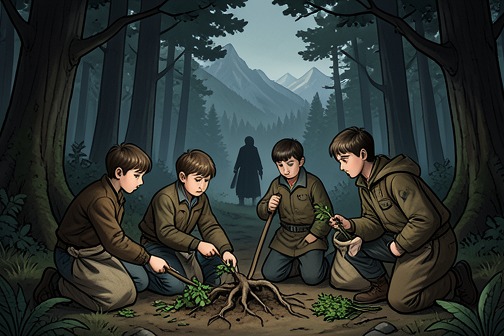
The [Villafuente Root-Poisoning Incident](entity:event-recall-event-villafuente-655492954606) begins as a children’s errand in the mountains and ends in death and concealment. Four boys from [Villafuente de Calcamar](entity:location-recall-location-villafuente-de-calca-02329d18b1a8), among them Freckles, discover and try a root that local lore associates with seeing the Devil. Their ensuing delirium is interpreted by the adults as possession: two boys die, and Freckles’s parents hide him rather than expose their family to the village’s fear and blame.
## The Root in the Forest
The boys were roaming through a forest in the rugged mountains of León, gathering aromatic and medicinal herbs at their parents’ request. Their sacks were already full of different varieties when Currinche, the expedition’s knowledgeable guide, began digging beside a plant. He could distinguish herbs by name and knew their medicinal properties; it was he who identified the root as the one people called cursed, said to make anyone who chewed it see the Devil.
The other boys had heard of the root but had never seen it. Freckles proposed testing whether the story was true or merely a tale. The choice brings local folklore into the boys’ ordinary work: the plant is at once an object of practical curiosity and the focus of a frightening belief. The passage does not identify the plant or explain its effects medically; it sets the boys’ experiment against the supernatural meaning already attached to it.
## Delirium and Deaths
When the boys’ parents and other men from the village reached the forest, led there by Adobe, they found the children hallucinating. Their speech was incomprehensible, their cries were unrestrained, their movements unsteady, and their eyes seemed mad. The sequence links these symptoms to the boys’ encounter with the root, but the adults understand what they see through the language of possession rather than as the consequence of trying a dangerous plant.
The men carried the children back toward the village, intending to ask the priest to sprinkle them with holy water and perform an exorcism. The return became a succession of deaths and sounds: Currinche died before they reached Villafuente de Calcamar; Mustafá died at dusk, suffering severe convulsions; and Freckles’s screams could be heard until midnight. Those keeping vigil over the dead heard the cries stop with the parish clock’s final chime. The root’s promise of a forbidden vision thus gives way to a concrete catastrophe, while the villagers’ response remains shaped by their belief that the children have been possessed.
## Freckles Hidden Away
Freckles survived the immediate episode, but survival did not bring him back into family life. His father muzzled and bound him, carried him in a sack to a remote family property, and locked him in an abandoned granary. Neither parent wanted a son they believed had the Devil inside him living with them. They also feared that neighbors would point to them as Satan’s parents and blame them for whatever misfortune might later befall the village.
The parents decided to take turns bringing Freckles bread, water, and apples—or whatever else was available—twice a week. The arrangement makes his confinement a continuing consequence of the forest incident, not a brief response during the crisis. On the day he was locked away, Freckles was ten years old. The details are starkly domestic: food is still brought, but only at intervals, and parental care is reduced to a routine of provisioning an isolated child whom his family has recast as a danger.
## Folklore, Fear, and Secrecy
The episode turns on a sharp contrast between the boys’ practical task and the adults’ supernatural explanation. They had been collecting plants for their families; the root’s reputation prompted an experiment, and the resulting delirium and deaths were treated as evidence of demonic possession. The passage supplies no independent confirmation of that interpretation. Instead, it shows how fear governs what the adults do next: they seek an exorcism for the group, then the parents of the surviving boy choose concealment.
The parents’ decision is driven not only by their belief about Freckles but also by anticipated public judgment. They fear the village will associate them with Satan and hold them responsible for future calamities. Their response preserves the consequences of the incident in secret: two boys are dead, while Freckles is removed from the community and maintained in an abandoned building. In this account, the cursed root’s reach extends beyond the forest encounter, shaping the village’s interpretation of suffering and the surviving child’s life through fear, stigma, and isolation.
Event 12
Freckles’ Rescue from Barn Captivity
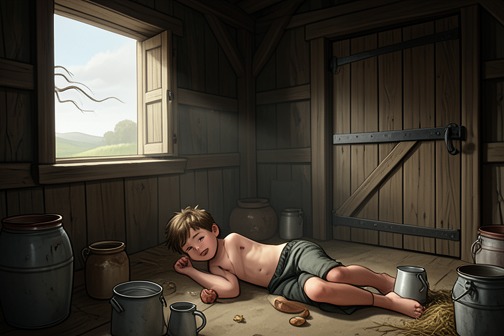
Freckles’ rescue turns a village’s tale of cursed children into a documented case of prolonged captivity. Found naked and near starvation in a locked grain barn in [Villafuente de Calcamar](entity:location-recall-location-villafuente-de-calca-02329d18b1a8), he is rescued by the [Guardia Civil](entity:organization-recall-organization-guardia-civil-268ba482c33f) and admitted to the asylum; his discovery also reveals the human cause behind the frightening cries once heard in the surrounding countryside.
## Captivity and the Village Legend
Freckles had been confined since the day he turned ten. His parents, who kept him shut away, took turns bringing him bread, water, and apples—or whatever else was available—twice a week. The account gives no explanation for the imprisonment, and it does not soften its consequences: his life narrowed to intermittent food and water, while the people outside had no ordinary contact with him.
The confinement became entangled with a story about damned children. For several days, when the wind blew from the west, cries were heard in the distance and terrified the neighborhood. Then the cries stopped and were never heard again. The episode preserves the village’s fearful interpretation without treating it as an explanation: the later discovery of Freckles supplies a concrete, terrible human circumstance in place of the supernatural account.
## Discovery and Rescue
Roughly twenty years after Freckles was shut away, hunters came to Villafuente de Calcamar seeking a guide through the dense countryside to hunt capercaillie. They hired a twenty-nine-year-old local man. During the journey, the party came upon an abandoned grain barn that even their guide had not known about. When rain forced them to seek shelter, the guide proposed using it.
The small opening through which grain was tipped into the barn had been nailed shut from the outside. The men forced it open and began lowering themselves inside by lantern light. They saw a naked man crouched in the darkness, with waist-length hair and beard and a body so malnourished that he looked like a living skeleton. His fingernails and toenails resembled claws; at the noise, voices, and lantern light, his expression showed unmistakable terror. The hunters chose the rain over the shelter and, once they reached a populated area, reported what they had seen at the first Guardia Civil post.
The Guardia Civil returned with the guide and rescued Freckles. He was wrapped in a blanket and brought to the asylum’s emergency department, which was directed by [José Muescas](entity:character-recall-character-jos-muescas-58ea8e606d57). The rescue ended his physical confinement, but the account records only the immediate institutional outcome: it does not describe his later treatment or recovery.
## Legal and Medical Aftermath
The discovery led to a judicial response as well as a rescue. The judge ordered the prosecution of Freckles’ parents and his admission to the asylum. His confinement was thus recognized not as a village mystery but as a matter demanding intervention by the authorities. The account does not specify the eventual legal outcome for his parents.
Freckles arrived on the same day that [Alice Gould](entity:character-recall-character-alice-gould-2e74f97e507b) had her disastrous interview with [Samuel Alvar](entity:character-recall-character-samuel-alvar-4a5f7bef80ea). The narrative places these sharply different crises side by side: Alice’s dispute turns on whether she has been admitted voluntarily, while Freckles is brought in after an external rescue from years of captivity. The coincidence fixes his arrival within the hospital’s unfolding events without implying that the two cases are connected.
## How the Episode Is Told
The rescue is presented retrospectively as a story inside the asylum narrative. At a meeting of the doctors, José Muescas recounts it to his colleagues, drawing on what the guide told the Guardia Civil and what the Guardia Civil in turn reported to him. The chain of testimony marks the account as assembled from witnesses rather than from Freckles himself; his terror is visible in the discovery scene, but the evidence supplied here gives him no spoken account of his captivity.
That distance sharpens the episode’s reversal. The community had heard cries and imagined condemned souls; the hunters’ lantern reveals a living person hidden behind a nailed opening. What had circulated as an uncanny disturbance becomes a case of sustained human confinement, followed by rescue, prosecution, and admission. The story establishes the brutality of Freckles’ circumstances while leaving his experience beyond the moment of discovery largely unvoiced.
Event 13
The Murder of García del Olmo’s Father
The murder of García del Olmo’s father is the unsolved crime that brings [Alice Gould](entity:character-recall-character-alice-gould-2e74f97e507b) into the asylum under the belief that she is investigating a case. Its apparent lack of motive, the suspicion directed at the victim’s son, and the anonymous accusations sent to him turn a brutal killing into an inquiry about evidence, trust, and the dangers of mistaking suspicion for proof.
## Background and the killing
The victim was an octogenarian who lived a retired life in his son [Raimundo García del Olmo](entity:character-recall-character-raimundo-garc-a-del-377ec83dea17)’s home. Raimundo was a physician, and the murder occurred while he was away in [Paris](entity:location-recall-location-paris-c02b439ce220) attending a professional congress. He discovered his father’s body on returning. Forensic examination placed the killing forty-eight hours before the body was found: three days after Raimundo’s departure and two days before his return.
The violence was extreme, but its purpose was obscure. The old man’s head and chest had been crushed with an instrument difficult to identify, in a manner likened to repeated blows from a large sack filled with sand. Nothing valuable was missing, and neither doors nor windows had been forced. The victim’s age and withdrawn life offered no apparent explanation in jealousy or personal revenge; investigators also discounted financial gain, since Raimundo was the sole heir but was already wealthier than his father. The case thus began with a stark mismatch: a killing of unusual brutality without an evident explanation or ordinary sign of theft.
## Suspicion and anonymous accusations
The crime attracted detailed newspaper coverage, but the investigation did not reach a conclusion. In Alice’s account to the hospital doctors, she explains that Raimundo approached her as a client after the case had remained unresolved. Their first conversation about it had taken place at her home, following an evening when [Heliodoro Almenara](entity:character-recall-character-heliodoro-almenara-b802ccaa3548) invited Raimundo to dinner. Raimundo came punctually to Alice’s office the following Monday.
His first startling disclosure was that the police suspected him. About a month after he reported the murder and gave his statement, he was summoned back to the police station. The concern had not passed: Raimundo later learned that police were checking with Spanish and foreign colleagues whether the professional steps he said he had taken during his Paris trip were accurate. That verification suggested that the inquiry was still active and that his account of the journey remained under scrutiny.
Raimundo also brought Alice small-format sheets bearing anonymous messages. Each had a narrow strip cut away with scissors, as though a printed letterhead had been removed. One accused him of killing his father while denying that the writer had done so. Alice reports the accusation rather than endorsing it: the letter supplies no proof, but its wording makes the sender’s identity and purpose part of the mystery. Raimundo asks her to determine who is writing, from where, and why. The question of his lost passport also enters their discussion; Alice proposes checking whether anyone used it to travel to [Madrid](entity:location-recall-location-madrid-8acd4123f416).
## Alice’s investigation
The murder is more than background to Alice’s admission: she tells the doctors that Raimundo is the client for whom she came to the institution. To investigate who might have been away from the hospital on the relevant dates, she asked the director for access to the records of selected residents. She needed to learn which had permission to leave the premises when García del Olmo’s father was killed. Her opportunity to inspect one of the records came only when the police commissioner requested it for the meeting.
That method gives the inquiry a concrete, testable direction. Instead of treating the son’s apparent opportunity or the letters’ accusations as conclusions, Alice turns to dates, movements, and institutional records. The evidence presented here establishes what she sought to examine, but does not by itself identify the murderer or show how the investigation was ultimately resolved. The case remains described as inconclusive at the point when Alice explains why she is at the asylum.
## Narrative significance
The account reaches the reader through Alice’s presentation to the doctors, where a private commission becomes the reason behind her supposed patient identity. The case’s chronology is relayed retrospectively: the killing, Raimundo’s police interviews, the letters, and Alice’s inquiries are assembled as evidence for the panel. This framing makes the unresolved status important. The story does not begin with a settled verdict but with competing claims—a police suspicion, an anonymous accusation, and a client’s insistence that he is innocent—whose reliability must be tested.
The physical details resist an easy solution. There is no forced entry, no missing property, no clear financial incentive, and no known personal feud; the weapon itself is difficult to classify. Meanwhile, the letters imitate certainty without offering substantiation, and the police’s verification of Raimundo’s travel keeps suspicion alive without proving guilt. Alice’s investigation therefore turns on the distinction between accusation and corroboration. The murder’s significance lies both in its unresolved brutality and in the way it draws her into the asylum, where access to records and the movements of its residents may bear on a crime committed beyond its walls.
Event 14
Alice Gould’s Asylum Admission for an Investigation
[Alice Gould’s Asylum Admission for an Investigation](entity:event-recall-event-4c431cd70f90) began as a covert inquiry and became a struggle over who controlled the meaning of her admission. Alice intended to enter the hospital under a feigned diagnosis so she could investigate the source of mysterious letters received by her client, [Raimundo García del Olmo](entity:character-recall-character-raimundo-garc-a-del-377ec83dea17). But the paperwork classified her as an involuntary patient accused of trying to poison her husband, [Heliodoro Almenara](entity:character-recall-character-heliodoro-almenara-b802ccaa3548). When Alice later recounted the arrangement before the doctors, her account exposed how an investigative plan had been converted into a confinement that she could not simply end herself.
## The commission and the undercover plan
Alice told the doctors that she had discovered the letters sent to Raimundo García del Olmo came from the psychiatric hospital. He placed an advance cheque for her fees on her desk and agreed to double the payment if she solved the case. Their arrangement divided the work: Alice would study the illness she planned to feign, while Raimundo prepared the admission procedures. She would persuade Heliodoro Almenara to request her hospitalization, and Raimundo would handle the remaining formalities.
Three days after Raimundo met with [Samuel Alvar](entity:character-recall-character-samuel-alvar-4a5f7bef80ea), he told Alice that he had asked the director whether a qualified detective could conduct a thorough investigation among the patients. According to Alice, Samuel raised no objection to the investigation and suggested that she enter as a patient, allowing her to make closer and more direct contact with residents. Raimundo said that he explained this plan when he returned from his trip and told her that a letter would soon arrive. In Alice’s account, the method was not incidental: becoming a resident was meant to make the investigation possible from within.
Alice also acknowledged how extraordinary the plan sounded. She asked the doctors to consider that she and Raimundo had lived within the law, and maintained that they had not intended to harm anyone or deceive anyone for personal gain. That explanation did not make the documents or the arrangement harmless; it established the gap between the purpose Alice claimed and the official account under which the hospital received her.
## Entry into an open institution
The hospital Alice entered had, [Montserrat Castell](entity:character-recall-character-montserrat-castell-e866aa901248) explained, operated under an open regime for only a few years. Patients could move with relative freedom through the building and grounds. Some gathered in the bar for dominoes, brisca, or parqués; others talked in the garden, walked through the extensive wooded area, attended occupational therapy, or worked in workshops that functioned like small industries. The objects made there were sold, and patients received wages that varied according to their abilities and output. Some could even travel by bus to nearby towns, particularly for local festivities. This freedom was the general rule, Montserrat cautioned, but there were many exceptions.
That distinction matters to the admission story: a hospital that allowed movement was not therefore an institution from which every patient could freely leave. The [Dementia Ward Known as the Lion Cage](entity:location-recall-location-565324b4175a) contained people so profoundly impaired that staff had to dress them, feed them, put them to bed, and manage their toileting. Care also extended beyond the staff. Some patients voluntarily looked after others who remained immobile; [Rómulo](entity:character-recall-character-r-mulo-de5c3d33411a) accompanied [Niña Oscilante](entity:character-recall-character-ni-a-oscilante-ee84b511de5c). The open regime and these intensive forms of custodial care existed side by side, giving Alice access to a broad social world while keeping the power to confine firmly in view.
At one early threshold, Montserrat objected that Alice was not yet a resident. Alice insisted that her admission had just been granted, then bent to retrieve a fallen lighter and handed it back with a trembling hand. The small action places the administrative change in a bodily scene: she had entered the role she intended to assume, but that role would soon acquire consequences beyond the investigation she had planned.
## The paperwork changes the stakes
The central reversal emerged when Alice insisted that she had entered of her own will and was a professional detective, not a patient under the director’s care. Samuel Alvar answered by distinguishing the two admission routes. For a voluntary stay, he said, Alice would have needed to sign a statement requesting treatment and to receive a certificate of admission from [Teodoro Ruipérez](entity:character-recall-character-teodoro-ruip-rez-ec534aa212cf), who had received her. Her file instead followed the procedure for involuntary confinement: a medical certificate from [E. Donadío](entity:character-recall-character-e-donad-o-e8b7847189d3) stating that she was ill and needed hospitalization, together with a request from her husband, Heliodoro Almenara.
Alice drew out the practical consequence of that difference. A voluntary patient could leave almost as readily as she had entered; when admission rested on a family request and a medical recommendation, departure was no longer a matter of personal choice. The documents thus did more than describe her condition. They determined who had authority over her release. Alice’s planned fiction had not secured the freedom she expected from a self-directed investigation; the file had made her liberty dependent on procedures and decision-makers outside her control.
In the doctors’ meeting, Samuel described the hospital’s position in stark terms: it had admitted Alice as a paranoid woman who had attempted three times to poison her husband, and it had undertaken to try to cure her. The accusation and the treatment commitment were presented as the established basis for her detention, regardless of what Alice said about her purpose. Her testimony, by contrast, located the poison allegation within the falsified arrangements. She said that the signature attributed to the health delegate was false and that the supposed attempts to poison Heliodoro were part of the distorted admission story. The discrepancy left the doctors confronting not just a disputed diagnosis but a file whose official authority depended on claims Alice said had been manufactured.
## Alvar’s silence and the cost of the arrangement
Alice’s account assigned Samuel a compromised role. She praised his reputation as a strict enforcer of hospital rules: he punished infractions and ordered confinement even when a patient suffered from claustrophobia. Yet, she argued, his kindness to a friend had led him to overlook irregularities so that a detective could be admitted. The plan was meant to remain secret. In Alice’s telling, Raimundo’s errors—including the false signature and the fabricated poisoning allegations—turned a discreet accommodation into a danger to Samuel’s standing and career.
She then proposed the choice Samuel had faced: to tell Raimundo that his detective had escaped, died, or been discharged, and thereby protect his own position, while allowing Alice’s liberty to be sacrificed. She put that explanation directly to him. Samuel looked at her for a long time and did not answer; Alice treated his silence as confirmation. His pallor, which had turned greenish, gave the exchange a visible consequence without resolving it through an explicit confession. The account establishes Alice’s interpretation and the director’s refusal to rebut it, rather than an independent statement from Samuel confirming every part of her reconstruction.
The episode’s decisive significance lies in the reversal between the planned and actual uses of admission. Alice meant to make the patient identity a tool for investigation, and Samuel’s alleged consent made that strategy seem possible. Once the involuntary file defined her as ill and dangerous, however, the institution could treat her explanation as insufficient to undo the legal status it had assigned her. The inquiry consequently became a contest over documents, authority, and testimony: the detective who entered to investigate the hospital found herself having to establish why she had been admitted at all.
Event 15
Alicia’s Statement and Confrontation with Alvar at the Doctors’ Meeting

The doctors’ meeting becomes both a clinical examination and [Alice Gould](entity:character-recall-character-alice-gould-2e74f97e507b)’s attempt to make the asylum answer for her confinement. She acknowledges that she entered by pretending to be mentally ill, but insists that this deception served a practical purpose: it allowed her to investigate a case. As [Samuel Alvar](entity:character-recall-character-samuel-alvar-4a5f7bef80ea) questions her account, she shifts the focus from whether she has lied to what the hospital has done with the power those lies helped place in its hands. Her detailed challenge to Alvar culminates in an accusation that he has sacrificed her liberty to protect his own position; his silence leaves the meeting’s central dispute unresolved in words, but charged with consequence.
## The Terms of the Examination
Samuel Alvar opens by distinguishing the doctors’ questioning from an interrogation by a journalist, police officer, prosecutor, or judge. The physicians, he explains, are not trying to convict Alice. The distinction matters: the meeting is presented as a clinical inquiry, yet its conclusions bear directly on whether she remains confined. When [César Arellano](entity:character-recall-character-c-sar-arellano-1dd2ae49c986) asks how many times she has lied since entering the hospital, Alice answers that the instances are beyond counting. Asked what she meant to achieve, she says that she simulated mental illness so that no one would obstruct her admission.
That admission confirms one part of the hospital’s suspicion while leaving another question open. Alice has not entered under the identity or circumstances she first presented; she has deliberately performed illness. But she frames that performance as a means of access, not as proof that the case she came to investigate was imaginary. The meeting therefore turns on competing interpretations of the same conduct: deceit can be treated as evidence against her credibility, while Alice treats it as the tactic that made her investigation possible.
Alvar states the institution’s position bluntly. Alice was admitted as a paranoid patient after, as he puts it, attempting three times to poison her husband, [Heliodoro Almenara](entity:character-recall-character-heliodoro-almenara-b802ccaa3548). Her husband requested the admission on a doctor’s recommendation, and the hospital accepted her on the undertaking that it would try to cure her. In this formulation, the doctors’ responsibility is not to accept Alice’s account simply because she offers it; it is to treat the person formally committed to their care. That commitment also exposes the difference between what Alice says she intended and the medical and legal status assigned to her.
## The Admission and Its Consequences
Alice’s claim that she came voluntarily collides with the documents in her file. The asylum’s director explains that a voluntary admission would have required Alice’s own signed request for treatment and a certificate from [Teodoro Ruipérez](entity:character-recall-character-teodoro-ruip-rez-ec534aa212cf), who received her. Instead, the file follows the procedure for an involuntary commitment: a medical certificate from [E. Donadío](entity:character-recall-character-e-donad-o-e8b7847189d3), registered in [Madrid](entity:location-recall-location-madrid-8acd4123f416), stating that Alice was ill and needed admission, together with an application from her husband as her relative. The paperwork gives the hospital’s version an official shape, even as Alice contests the assumptions behind it.
For Alice, the distinction is not merely technical. She reasons that a voluntary patient could leave almost as easily as she had entered, whereas a patient committed at a relative’s request on a medical recommendation could not simply walk out when she chose. She compares that constraint to imprisonment, where departure depends on the end of a sentence. The analogy clarifies why the classification matters so intensely: the dispute over how she entered is also a dispute over who can determine when she leaves.
The scene also returns to the beginning of her story. Alice dates the start of events to February 29, her husband’s birthday, which he celebrates with a large party every leap year. She recalls that she told Heliodoro she would be going to [Buenos Aires](entity:location-recall-location-buenos-aires-f4be140f43ae) to investigate a possibly forged will. Now, she says, he does not know where she is; she cannot contact him, and her letters have not reached him. She fears that he may think she has abandoned him and may be searching for her in South America. Her appeal asks the doctors not only to assess her but to help restore contact with the person whose application helped place her there.
## The Disputed Letter
A turning point comes when Alice identifies a false element in the account of her case: Samuel Alvar says that he never suggested that anyone write him the letter in question. Alice responds not by abandoning the letter, but by detailing its physical characteristics. It is folio-sized, has no letterhead, is dated March 21, and is typed on both sides on a Baby Olivetti matching the model used at the hospital by [Montserrat Castell](entity:character-recall-character-montserrat-castell-e866aa901248). A paragraph on the second page is underlined, and the closing expresses the writer’s affection for the Almenara couple.
The specificity turns the document into more than an allegation passed from person to person. Alice offers features that can be checked—the date, paper size, absence of a letterhead, typewriter model, two-sided typing, underlining, and wording of the farewell—while the meeting weighs Alvar’s denial that he commissioned it. Her case does not rest solely on a general assertion that someone has deceived her; she presents a chain of concrete details and asks the doctors to consider what they imply. Yet the letter’s significance remains entangled with the broader question of Alice’s reliability, since she has just admitted to lying repeatedly in order to secure admission.
## The Accusation Against Alvar
Alice tells the doctors that her grave mistake was informing Heliodoro that she was going to Buenos Aires to investigate the potentially forged will. With her husband unable to find her and her letters failing to arrive, she pleads for the doctors to contact him. The appeal is personal, but it also sharpens the institutional stakes: the hospital’s handling of her case has cut off the very communication that might clarify what is happening outside its walls.
She then advances a more damaging explanation for Alvar’s conduct. In her account, a friend’s imprudence has put the director at risk of abrupt dismissal, a court of honor, and expulsion from his profession. She suggests that he chose to tell [Raimundo García del Olmo](entity:character-recall-character-raimundo-garc-a-del-377ec83dea17) that his detective had escaped, died, or been discharged, trading Alice’s freedom for the protection of his own honor and career. This is Alice’s accusation, not an independently confirmed account of Alvar’s motives. But when she asks whether that is how events occurred, Alvar looks directly at her and does not answer. His complexion changes from white to greenish. Alice treats the silence as confirmation and thanks him, then serves herself the whisky César Arellano had authorized.
The meeting’s tension lies in the way no single fact settles the matter. Alice concedes deliberate deception, while exposing the involuntary procedures that made her confinement difficult to end. Alvar maintains the hospital’s clinical obligation, but does not answer the final charge. During the discussion, Arellano privately counts five votes in Alice’s favor, one against, and one abstention from Ruipérez; the count registers a shift in the room without itself resolving the case. Alice’s statement thus functions as both testimony and counter-investigation: she is examined as a patient, but examines the documents, decisions, and silences that have made the asylum her unwilling setting.
Event 16
The Asylum Outing and the Sheep-Scattering Panic
[The Asylum Outing and the Sheep-Scattering Panic](entity:event-recall-event-00a8834730bd) turns an ordinary excursion into a crisis of movement and control: when a large flock of sheep and goats approaches the patients, fear spreads faster than staff can respond. The episode exposes the precarious balance behind the hospital’s open regime. Patients have room to move beyond the building, but freedom of movement offers little protection once confusion takes hold across a crowd.
## An outing under the open regime
The excursion begins on a splendid morning, and many patients sign up. The scene belongs to a hospital where movement outside the wards is not exceptional: under the open regime, patients can walk in the grounds, attend activities, and, under the institution’s arrangements, even travel to nearby villages. The outing extends that principle into the countryside, but it also places a large group in an environment the hospital staff cannot fully control.
The preparations show that the staff anticipate the practical demands of the trip. They call out instructions against pushing, count the patients for whom they are responsible, arrange the order of march, and consult one another. Their activity is administrative and immediate: the group must stay together, be counted, and move in an orderly way. Yet the preparations cannot account for the effect of an unexpected encounter with animals on a crowd already requiring supervision.
As the gates open, the sheep prove less controllable than the director had imagined. Sheep and goats tend to move together, and the flock’s approach turns the planned walk into an encounter between two groups being herded through the same space. Among the sheep are “caretas,” marked by large black patches around their eyes, and white “palomas.” The detail gives the flock a visible variety, but the patients experience it not as a calm pastoral spectacle: the animals arrive in great numbers, raising dust and filling the air with confused bleating and the sound of their bells.
## The panic spreads
Some patients become agitated at the sight and noise. The nurses halt the march and call to the shepherds to change direction, because the flock is coming toward them and the patients’ reactions are unpredictable. The staff recognize the danger as the animals approach, but their attempt to redirect the flock comes amid an already unsettled crowd. The encounter is no longer simply a question of keeping to the route; the staff must respond to the animals and to the patients’ changing behavior at once.
Fear takes hold collectively. Patients cry out that the sheep will finish with the flock and then turn on them. The comparison to the famous hidalgo who mistook a flock for an enemy army reverses the familiar image: here, the sheep are not dispersed by a lone deluded attacker. Instead, the peaceful flock sets more than two hundred patients fleeing. The reversal is comic in its literary allusion, but its consequences are not merely comic. Some run from terror; others run because they see everyone else running; still others run in an effort to stop the flight. The crowd’s different impulses merge into a confused rush in which few understand what is happening.
The shepherds’ dogs and the flock’s keepers remain the ones who know what is actually happening around the animals. In the confusion, the dogs attack some of the few patients who do not join the general panic. The excursion has become a disorderly dispersal: the same outward movement that made the open regime possible now carries patients away from the group and beyond the staff’s immediate reach.
## The missing and the injured
When the patients are counted, eight are missing. Three, beaten and bitten by the dogs, are eventually recovered from the shepherds several hours later. Four are never heard of again. Another patient, described through his aesthetic sensibility, cuts the veins in his wrists with the glass from his spectacles and watches complacently. The account thus records distinct consequences rather than a single undifferentiated stampede: people are injured by the dogs, some remain unaccounted for, and one patient harms himself during the episode.
The return is prolonged and incomplete. The last stragglers take close to three hours to come back, and many never return at all. That final reckoning sharpens the incident’s central reversal. The excursion was organized around a group whose movements the institution expected to manage; after the panic, the group cannot simply be gathered and led back as planned. The missing patients make the limits of the staff’s headcounts and instructions concrete, while the delayed return leaves the outing unresolved even after the immediate flight has passed.
## Significance
The episode makes the open regime’s promise and vulnerability visible in the same scene. The patients have been allowed beyond the hospital grounds, but this outing shows that permission to move is not the same as the ability to manage every risk encountered outside. Staff members make preparations, issue instructions, and try to redirect the flock; none of these measures prevents fear from spreading once the animals approach and the crowd begins to run.
The sheep also overturn the expected hierarchy of the scene. The animals are described as peaceful, yet their numbers, dust, and noise unsettle the patients, and the established order of the march collapses. The comic reversal of the literary allusion—sheep scattering people rather than a supposed army—does not cancel the episode’s physical consequences. Its humor sits beside injuries, self-harm, missing patients, and a return that takes hours. The outing therefore becomes a compact demonstration of how quickly institutional order can give way when a supervised group meets an unpredictable situation in open space.
Event 17
The Elephant Man’s Fatal Misidentification of Remo
[The Elephant Man’s Fatal Misidentification of Remo](entity:event-recall-event-aa12d47cf087) is solved through a distinction almost everyone at the hospital overlooked: the dead twin was [Remo](entity:character-recall-character-remo-8f5cc226c0e7), not [Rómulo](entity:character-recall-character-r-mulo-de5c3d33411a). [Alice Gould](entity:character-recall-character-alice-gould-2e74f97e507b)’s identification transforms the case from a baffling killing into a reconstruction of how the Elephant Man mistook one brother for the other—and why that mistake proved fatal.
## Identifying Remo
When Alice announced that Remo had died, her claim startled those present. [Montserrat Castell](entity:character-recall-character-montserrat-castell-e866aa901248) was especially taken aback: she had not known Remo was dead, and Alice’s appeal to her as a witness seemed at first to put their friendship at odds with the facts. But Alice explained that the brothers were so alike that doctors and patients usually distinguished them by temperament. Rómulo was agile, noisy, and constantly active; Remo was peaceful and solitary.
Alice then supplied a less familiar identifying mark. Rómulo had a small, pea-sized swelling on the outer part of his right ear, while Remo had none. She noted that her own ear had a similar feature. Montserrat confirmed the distinction, giving Alice’s identification a witness at the very moment her disclosure had unsettled the room. The detail mattered beyond naming the victim: as Alice reasoned, the Elephant Man could have caught the slower, unsuspecting Remo, whereas the agile Rómulo would have been much harder for him to seize.
## Reconstructing the Killing
Alice’s account turned on what each twin would have done in the Elephant Man’s presence. Rómulo was extraordinarily agile and, once alerted, would keep behind the giant on the return from the outing. Remo, by contrast, had no reason to flee from him. Alice proposed that the Elephant Man suddenly saw Remo beside him, took him for his brother, and attacked. The brothers’ resemblance made the mistake possible; their different temperaments made the fatal encounter possible in a way it would not have been with Rómulo.
The killing, as Alice reconstructed it, relied on the giant’s weight rather than a weapon. He hoisted Remo onto his back, then let himself fall on him, repeating the movement until his 160 kilograms crushed him. The method explained why Remo’s body had been so brutally damaged and why the Elephant Man’s build mattered to the case: the same clumsiness that made him unlikely to catch the fleet Rómulo became lethal once he mistook the more solitary Remo for his twin.
Alice pointed to traces that could test this reconstruction. The Elephant Man had scratches and bites on his back, consistent with Rómulo attacking him from behind; grass caught on the back of his clothes suggested repeated falls, and the dead man’s blood stained his trousers. Unless Rómulo had been bathed and cleaned, Alice added, his fingernails should hold bloodied skin from the killer’s face and ears. Her explanation was not presented as an eyewitness account: when the commissioner asked whether she had seen the events herself, she did not answer directly. Instead, the physical details offered a way to check her inference.
The subsequent questioning supplied that check. Rómulo had blood beneath his nails and said he had fled in fear after seeing the fat man kill a child. [Norberto Machimbarrena](entity:character-recall-character-norberto-machimbarr-0e44baf9e4fc), known as the Elephant Man, had blood, saliva, and excrement on the seat of his trousers. Believing he was speaking to his superiors in Naval Intelligence, he described the events in a way that matched Alice’s reconstruction. The bodily traces and the two men’s accounts thus converged on the fatal misidentification: Remo had been mistaken for Rómulo and killed by the giant.
## The Deduction Changes the Room
The case also becomes a test of whether Alice Gould’s reasoning will be heard as evidence or dismissed as delusion. The commissioner had expected a fantastic account from a woman he regarded as excessively talkative; instead, her identification of Remo and the deductions that followed left him increasingly astonished. [Teodoro Ruipérez](entity:character-recall-character-teodoro-ruip-rez-ec534aa212cf) began to doubt his first judgments of her, while [César Arellano](entity:character-recall-character-c-sar-arellano-1dd2ae49c986) trusted her powers of observation and intelligence enough to believe she was telling the truth. Montserrat, still shaken by the revelation of Remo’s death, could only pray that Alice would come through the questioning safely.
That change in the listeners’ attitudes gives the solution a significance beyond identifying the killer. Alice’s account is not accepted merely because she states it confidently: the inquiry tests it against the brothers’ distinguishing feature, the physical traces, and the men’s statements. When those lines of evidence converge, the cases are declared solved. The episode thus makes Alice’s precision visible to the people judging her, while leaving intact the tension between her evident competence and the institution’s prior assumptions about her.
## Closure of the Inquiry
After Rómulo and Norberto Machimbarrena had been questioned, the inquiry briefly reviewed the medical histories of both men before declaring the cases solved. The closing sequence places those records beside testimony and physical evidence, making the resolution an institutional finding rather than an inference left solely in Alice’s hands.
Event 18
Alicia Solves Three Asylum Murders
[Alicia Solves Three Asylum Murders](entity:event-recall-event-0b71256e7eed) is the point at which [Alice Gould](entity:character-recall-character-alice-gould-2e74f97e507b)’s close observation becomes a working criminal investigation: she examines the dead, reconstructs how the killings occurred, and persuades officials to test her deductions against the suspects themselves. The sequence makes the mortuary a place of recognition and evidence, where details of wounds and bodies—not merely the authority of the police or hospital—drive the inquiry.
## Entry to the Mortuary and Examination of the Dead
After learning that the bodies were kept on the same floor, Alice put on a white coat and approached the police officer guarding the corridor. She claimed to be the new forensic examiner, and he let her pass. Inside, four bodies lay on operating tables. The two [ETA](entity:organization-recall-organization-eta-fb5f459c73b9) members had been killed by cuts to the throat, apparently with a large knife; [Rómulo](entity:character-recall-character-r-mulo-de5c3d33411a) had no visible wounds, a dried thread of blood at his lip, and a body less rigid than those of the two men, suggesting that he had died more recently. Alice touched Rómulo’s face and kissed his forehead before mastering her emotion and looking closely at the other bodies. She also recognized the drowned man as the first person she had seen sleeping on the so-called schizophrenic pillow. The inspection was both personal and analytical: grief did not prevent her from attending to physical differences, and she concluded that she knew who had killed the other three.
## Reconstructing the Killings
At the police commissioner’s request, Alice dictated what she had observed and what she inferred. She distinguished the physical evidence from the story she built around it: the two ETA members had been killed with a knife, and [Ignacio Urquieta](entity:character-recall-character-ignacio-urquieta-13fa5efbf25e) could not have killed them. Her explanation of how they were lured below the hospital turned on a specific deception. Someone who spoke Basque stopped the fugitives, offered help, and led them into the underground maze by promising that an old passage built by the monks would take them beyond the walls. He told them to wait while he fetched a lantern; instead, he returned with a knife. The basement’s labyrinthine layout and the promise of escape made the false guide’s offer plausible enough to draw the men into danger.
The case of Rómulo’s death redirected the inquiry. Alice insisted that the young man had died, provoking disbelief and visible shock, then said she had suspected the killer as soon as she recognized him. She did not present the giant’s guilt as a guess detached from evidence: she asked to see his medical file and the man himself, and requested that Rómulo’s twin be brought in. Her questions shifted the investigation from a reconstruction of the scene to a test of what the suspects could have done and what their own accounts would show.
Alice’s reconstruction of the giant’s attack was grimly physical. She described him carrying Rómulo on his back and repeatedly dropping his own weight onto him, crushing him with the force of a man weighing 160 kilos. The image makes the method intelligible through the giant’s size and strength, while the request to examine him and hear from the twin turns that explanation into a claim the officials can check.
## Testing the Reconstruction Against the Witnesses
The officials then put Alicia’s account to the people she had asked to see. Rómulo’s twin had blood beneath his fingernails and said that he had fled because he was terrified after seeing the fat man kill a child. The physical trace and the boy’s explanation supported the distinction Alicia had drawn between what he witnessed and what he did not do.
[Norberto Machimbarrena](entity:character-recall-character-norberto-machimbarr-0e44baf9e4fc), the giant, also bore telling signs: blood, saliva, and excrement marked the back of his trousers. Believing he was speaking to his superiors in Naval Intelligence, he recounted the events as Alicia had reconstructed them. His delusion did not make him a reliable witness in the ordinary sense, but his account, together with the physical evidence and the medical histories read by the officials, confirmed the explanation. The cases were declared solved.
The commissioner stood to see Alicia off, thanked her for the information, and warmly congratulated her as a professional policewoman. His recognition gave the investigation an official conclusion: what had begun with her passing herself off as a forensic examiner ended with the authorities accepting her deductions and verifying them against the men involved. Alicia was radiant—not simply because she had solved the deaths, but because the success of her inquiry had finally been acknowledged by the officials whose judgment had kept her confined.
## Evidence, Credibility, and the Limits of Eyewitness Knowledge
The inquiry also turns on a distinction between seeing a crime and reconstructing it. When asked whether she had witnessed the events she described, Alice did not answer directly. Instead, she had to make her account testable: the officials summoned the people she had requested, examined physical traces, and consulted their medical histories. The twin’s bloodied fingernails and fear-driven explanation, alongside Norberto Machimbarrena’s condition and account, supplied checks beyond Alice’s own interpretation. Her refusal to pose as an eyewitness leaves the reconstruction dependent on inference, but the inquiry gives that inference material points against which it can be assessed.
That standard matters because the room does not begin by granting Alice authority. The commissioner had expected a fantastic account from a talkative, disordered woman; as she explained how she had recognized the dead and reasoned from what she saw, his astonishment grew. [Montserrat Castell](entity:character-recall-character-montserrat-castell-e866aa901248) feared for Alice’s prospects, [Teodoro Ruipérez](entity:character-recall-character-teodoro-ruip-rez-ec534aa212cf) began to question his earlier judgments, and [César Arellano](entity:character-recall-character-c-sar-arellano-1dd2ae49c986) trusted her powers of observation and intelligence. Their differing responses make the resolution more than a solution to the deaths: it is also a public test of whether Alice’s reasoning can be distinguished from the assumptions officials have made about her.
Event 19
Severiano García del Olmo Murder Case
The [Severiano García del Olmo Murder Case](entity:event-recall-event-severiano-garc-a-del-ol-3e2e8e38cdbe) is the investigation in which [Alice Gould](entity:character-recall-character-alice-gould-2e74f97e507b) identifies the killer of [Raimundo García del Olmo](entity:character-recall-character-raimundo-garc-a-del-377ec83dea17)’s father by connecting a distinctive pattern of fatal injuries with the suspect’s history and a brief opportunity to leave the asylum. Her reconstruction turns a seemingly remote family murder into a consequence of decades of confinement—and gives the police a concrete test of the deductions they had once been inclined to dismiss.
## Background and the Clues
The case comes into focus during Alice’s account to Commissioner Ruiz de Pablos. Her confidence has been sharpened by the earlier discovery of three murders, but this time she insists on moving from intuition to evidence. The starting point is the victim himself: [Severiano García del Olmo](entity:character-recall-character-severiano-garc-a-de-f61e09da8217) had a cousin, Raimundo, whom he saw very little because the cousin lived far away in Ourense and had a reputation for being eccentric. Raimundo confirms this family connection as Alice begins setting out the history behind the crime.
Alice’s crucial comparison is not with a weapon but with a body. The file she manages to inspect shows that Severiano did not die from blows with a sandbag, as had been supposed. His injuries instead matched those of [Remo](entity:character-recall-character-remo-8f5cc226c0e7), the twin whom the Elephant Man had killed: the killer had jumped on the victim, crushing his chest and rupturing his entrails. The resemblance transforms a disputed account of Severiano’s death into a recognizable method, and gives Alice a specific reason to look for someone already associated with the earlier killing.
## The Suspect and the Window of Opportunity
Alice’s search of the asylum records gave the pattern a suspect and a time. She had asked the director for files of patients who might have been allowed outside the hospital on the dates relevant to the murder. While the commissioner was examining Alice’s own file and waiting for the young [Rómulo](entity:character-recall-character-r-mulo-de5c3d33411a) to arrive, she seized the chance to inspect another. It showed that [José Sáez García](entity:character-recall-character-jos-s-ez-garc-a-f949f8bb52ea), known in the asylum as [Hombre Elefante](entity:character-recall-character-hombre-elefante-d00fb98f18a8), had been committed by his uncle, Severiano García del Olmo. Under the hospital’s open regime, Sáez had been permitted to leave for three days; the second coincided with Severiano’s murder. The institutional record thus supplied a narrow opportunity that aligned with the matching injuries.
Alice’s conclusion also rests on a motive she attributes to Sáez: resentment toward the uncle who had him committed, and hatred of his cousin, whom he regarded as the clever one. She presents the combination as a pattern of revenge, not merely a chance to leave. The commissioner adds that Sáez had killed an intellectually disabled young man less than a month earlier, giving the proposed identification a recent precedent. Yet the account is not offered as eyewitness testimony: when asked whether she had seen the events she described, Alice does not answer directly. Her case is assembled through records, bodily evidence, opportunity, and a repeated method, leaving the listeners to judge the force of the inference.
## The Investigation as a Public Test
For Alice, the case is also a test of whether her reasoning will be recognized. Before the interview, she remembers the commissioner’s admiration when she uncovered three earlier murders and anticipates that solving Severiano’s death will change how the room sees her: not as the fantastic, dreamy woman whose personality others find mysterious, but as an investigator who can resolve a concrete crime. The murder inquiry and the question of Alice’s own credibility therefore converge in the same presentation.
That convergence gives her reconstruction a double edge. The asylum file is not merely background to the family history: its dates connect José Sáez García’s rare leave from confinement to the murder, while the injuries connect Severiano’s death to the fatal method associated with Remo. Alice lays these elements before the commissioner and Raimundo García del Olmo, making an institutional record and a bodily resemblance carry the weight of an accusation. The passage presents her conclusion as a reasoned identification, while leaving the distinction between deduction and direct witnessing visible.
## The Listeners and the Limits of Proof
The accusation changes the room before it is formally resolved. Commissioner Ruiz de Pablos had expected the rambling fantasy of a talkative patient; as Alice identifies Severiano as the victim and names her suspected killer, his attention shifts to her account. [Teodoro Ruipérez](entity:character-recall-character-teodoro-ruip-rez-ec534aa212cf) begins to question his earlier judgments, while [César Arellano](entity:character-recall-character-c-sar-arellano-1dd2ae49c986), already convinced of Alice’s observational skill and intelligence, believes she is telling the truth. Their differing responses make the case more than a reconstruction of a killing: it becomes a test of whether evidence can be heard when the investigator herself has been classified as unreliable. Alice offers no claim of having witnessed the murder, and her silence when asked directly about seeing the events leaves that boundary intact. The case’s force rests instead on the convergence of a recorded opportunity, a family grievance, and an injury pattern; its presentation asks the listeners to assess that convergence rather than mistake deduction for eyewitness knowledge.
Event 20
Machimbarrena’s Murder of Two ETA Members

[Norberto Machimbarrena](entity:character-recall-character-norberto-machimbarr-0e44baf9e4fc)’s killing of two [ETA](entity:organization-recall-organization-eta-fb5f459c73b9) members is recalled as the grim return of a delusion that the hospital had believed cured: after more than forty years in the institution, he killed two newly admitted ETA patients within a day. The episode becomes more than a past act of violence when [Samuel Alvar](entity:character-recall-character-samuel-alvar-4a5f7bef80ea) invokes it in discussing [Alice Gould](entity:character-recall-character-alice-gould-2e74f97e507b), placing the uncertain grounds for her confinement beside a case in which paranoid belief had proved lethal.
## Background and the Recalled History
Machimbarrena had been admitted about four decades earlier after acting on what he believed were orders from his superiors, transmitted mind to mind, to eliminate Basque separatists. The account identifies him as paranoid and describes the killing as the execution of a delusional command, not as an independently established political mission. That distinction matters: his belief supplied the purpose he thought he was obeying, while the hospital’s interpretation of his condition supplied the frame through which the earlier and later acts were understood.
For more than forty years, the institution had considered him cured. The length of that interval gives the murders their particular force in the retelling. A judgment maintained across decades did not prevent a sudden return to lethal action when two patients associated with ETA arrived. The account does not describe a gradual warning or a renewed clinical assessment before the killings; it stresses the sharp reversal between presumed recovery and violence.
## The Killings and Their Immediate Significance
The two ETA patients had been in the hospital for less than twenty-four hours when Machimbarrena killed them both. Their brief stay is the key measure of the event’s speed: the violence followed their admission almost immediately. The account does not name the victims or supply further details of the killings, but it makes clear that their presence coincided with the reactivation of the very kind of mission that had led to Machimbarrena’s original confinement.
The murders therefore unsettle the reassuring force of the word cured. In Alvar’s retrospective account, a patient could be treated as recovered for decades and still act on a delusional command when circumstances appeared to match it. The episode establishes the seriousness of the hospital’s failure to anticipate what happened, without explaining what assessments or precautions had preceded the deaths.
## The Case in the Dispute over Alice Gould
Alvar brings up Machimbarrena while describing Alice as paranoid, using the earlier case as a comparison in a dispute about whether she is dangerous. The comparison is consequential but not conclusive: Machimbarrena’s killings are presented as established events, whereas the alleged attempts by Alice to poison her husband appear in the medical recommendation for her admission. At the doctors’ meeting, the other physicians question Alvar’s use of the charge, noting that the recommendation itself had been falsified by the fraudster who swindled her. The two cases thus occupy different evidentiary ground even as they are placed side by side in argument.
After the ETA killings, Alice also uses the case to manipulate [Melitón Deza](entity:character-recall-character-melit-n-deza-bd1e29b0d279). She falsely tells him that the director had suggested Deza informed Machimbarrena that the two separatists were present and helped them escape so that the killer would reach them. Deza does not know this allegation, and the narration explicitly identifies Alice’s story as a lie. The episode shows the murders acquiring a second life as a tool in the hospital’s personal and institutional conflicts: their reality is not in doubt, but claims about who enabled them can be invented and circulated.
## Narrative and Institutional Significance
The murders are recounted retrospectively rather than staged in the available account. Their force lies in the contrast Alvar draws between prolonged presumed recovery and violence within hours of the two patients’ arrival, and in the way that contrast enters the argument over Alice’s diagnosis and detention. The episode warns against confusing a long-standing clinical judgment with certainty about future conduct; at the same time, the dispute over Alice shows why a grave comparison cannot substitute for reliable evidence about an individual case.
Event 21
Antonio el Sudamericano’s Suicide in the Women’s Ward
[Antonio el Sudamericano](entity:character-recall-character-antonio-el-sudameri-a502c2197032)’s suicide in the women’s ward is the culmination of a breakdown witnessed by [Alice Gould](entity:character-recall-character-alice-gould-2e74f97e507b): believing his father dead, Antonio condemns himself as the cause, then disappears before staff can intervene. The discovery of his body in the women’s showers turns a crisis Alice had tried to report into a fatal loss, and the father’s first visit later that day gives the imagined death a devastating real-world counterpoint.
## The imagined telephone call
The episode begins in a nearly empty room occupied by three patients: a silent, self-punishing woman, an enormous motionless man, and Antonio, who is agitated and crying. Alice sits apart from them. Without warning, Antonio grips the door handle and acts as if it were a telephone, trying to reach an old friend. His side of the exchange shifts from calling out to asking who is on the other end. The scene makes his isolation visible: the conversation is not with another person but with words he imagines hearing.
Antonio listens intently, moving his lips in time with the imagined replies. Then his expression changes; he cries out, clenches his free hand, and repeatedly strikes himself in the face. The action makes the crisis physical before it becomes an explicit accusation. When he turns from the supposed telephone, he looks around the room as if searching for someone who can receive his grief, then runs to the motionless man and clings to him, sobbing that his father is dead because Antonio could not study.
## Guilt and the failure of contact
Antonio’s account makes academic failure the center of his imagined bereavement. He believes his father wanted him to study and that, because he could not do so, he had disappointed him to death. He calls himself his father’s killer, treating an inability to study as both the cause of the loss and proof of personal guilt. The narration stresses the mismatch between the certainty of this accusation and the death it describes: Antonio’s grief is overwhelming, but the father’s death exists only in his belief at this point in the scene.
The man Antonio embraces does not hear, understand, or see him. His stillness offers no answer to Antonio’s anguish; the narration observes that he might as well have embraced a tree or a piece of furniture. This contrast is central to the episode’s painful construction. Antonio reaches for another body, but the gesture produces no human response, leaving his imagined conversation and his grief enclosed within themselves.
Alice recognizes the danger in what she has witnessed. She goes to find a member of the medical staff, convinced Antonio should no longer be allowed to remain under the hospital’s open-regime policy and instead needs to be confined promptly. [Samuel Alvar](entity:character-recall-character-samuel-alvar-4a5f7bef80ea) answers her sharply, telling her not to instruct him about what he should do. The disagreement leaves a consequential interval between Alice’s alarm and the search that follows; the account establishes her urgency and Alvar’s rebuke, but does not claim that this exchange alone explains Antonio’s suicide.
## Search and discovery
When Alice and Samuel Alvar enter the [Central Hall for the Forsaken](entity:location-recall-location-32baeb966c29), Antonio is already gone. They search the ground floor without finding him. [The Iron Gate Called the Border](entity:object-recall-object-f5890f95fbdc) is shut, making the offices inaccessible by that route; if Antonio had gone out into the park, he would have been seen. Alvar hurries upstairs toward the men’s unit, while Alice alerts [Conrada Azpilicueta](entity:character-recall-character-conrada-azpilicueta-e9897a6d2db7). Conrada, Roberta, and Alice search the women’s unit, extending the search across the hospital rather than assuming Antonio has remained where they last saw him.
They find him in the women’s showers, hanged with his own shirt from the shower fitting. Staff make every effort to revive him. Alice hears that his heart begins beating again, but only for a few seconds. The brief return of a heartbeat does not reverse the outcome; it makes the attempt at rescue another moment of hope cut short. The location and means of death also complete the episode’s abrupt change of scene: the room where Antonio had sought contact through an imagined call gives way to a shower room where the searchers find him alone.
## Aftermath and tragic reversal
The narration sets Antonio’s death beside a verse associated with Jorge Manrique about the folly of trying to live when death is desired, then recasts the thought around the effort to revive someone who wants to die. This reflection follows the failed resuscitation rather than preceding it: its force comes from the seconds in which Antonio’s heart reportedly beats again, and from the immediate recognition that this return cannot hold. The episode does not present the maxim as a diagnosis of Antonio’s motives; it frames the limits of rescue after the event.
At seven that evening, Antonio’s father visits him in the hospital for the first time. The timing overturns the imagined loss that drove Antonio’s final crisis: the father he believed dead arrives only after his son has died. The visit confirms neither Antonio’s belief nor his accusation; instead, it places the actual father and the imagined bereavement on opposite sides of an irreversible delay.
Alice is deeply affected and repeatedly blames herself for not alerting a staff member sooner, when she first saw the crisis taking shape. Her response gives the episode a second aftermath alongside the death itself: the witnessed emergency becomes a lasting question of whether earlier intervention might have mattered. The account records her guilt without establishing that she could have prevented the suicide. Its tragedy rests in the gap between recognizing that Antonio was in danger and reaching him in time.
Event 22
Alicia’s Meeting with the Impostor Claiming to Be García del Olmo
[Alice Gould](entity:character-recall-character-alice-gould-2e74f97e507b)’s meeting with the impostor claiming to be [Raimundo García del Olmo](entity:character-recall-character-raimundo-garc-a-del-377ec83dea17) turns an investigation into an immediate confrontation over identity and captivity. Summoned to discuss the death of Raimundo’s father, she finds that the person introduced as the doctor is not, in her judgment, the man he claims to be. Rather than proceed with the expected account of the murder, she formally challenges the identification and asks the police to protect her from her alleged kidnapping. The encounter leaves the central question of who the visitor is unanswered, but makes Alice’s distrust of [Samuel Alvar](entity:character-recall-character-samuel-alvar-4a5f7bef80ea) impossible to mistake.
## The meeting and its purpose
The meeting takes place in the director’s office, where Samuel Alvar, Commissioner Ruiz de Pablos, Dr. [José Muescas](entity:character-recall-character-jos-muescas-58ea8e606d57), and another man are present. Raimundo García del Olmo is not there. The director explains that the supposed Dr. García del Olmo has come to hear what Alice knows about his father’s death, placing her before an official audience and apparently offering her the opportunity to give her suspicions directly to the victim’s son.
Alice’s presence follows an investigation she has been conducting inside the hospital. She had asked Alvar for the records of some residents, seeking to identify who had permission to leave the hospital on the dates when García del Olmo was murdered. She says she had seen only one of the relevant files, and that opportunity came when the commissioner had asked for it to be brought to his office. The detail establishes a specific, limited basis for her inquiry: she was trying to compare access to the outside world with the timing of the murder, rather than relying only on impressions of the residents.
The supposed doctor’s arrival sharply alters the meeting’s purpose. Alice first expresses impatience to disclose her suspicions and asks where Raimundo is. The room reacts with surprise when the serious-looking visitor identifies himself as the doctor. What had been arranged as a hearing about a murder thus becomes a test of the visitor’s identity—and, by implication, of the reliability of the people who have brought Alice into the room.
## Alice’s recognition and accusation
The visitor is described as short, bald, stout, and plain-faced, with myopic, somewhat protruding eyes likened to those of a fish. These physical details distinguish him in the scene, but the account does not disclose what Alice recognizes, or what evidence enables her to reject his claim. Her reaction is instead conveyed through visible restraint: her face hardens, her eyes remain dry, and her teeth are clenched. She slowly and repeatedly moves her head, in a gesture compared to the motion of the [Niña Oscilante](entity:character-recall-character-ni-a-oscilante-ee84b511de5c).
When Commissioner Ruiz de Pablos asks whether she has anything to say, Alice addresses him formally. She declares that the man is not Raimundo García del Olmo and requests police protection because she is being held against her will. The shift is decisive: rather than answer the inquiry about the murder, she contests the premise that the gathering is what its organizers say it is. Her claim is explicit, but the scene presents it as her accusation; it does not independently establish who arranged her detention or what the visitor’s actual identity is.
## Alvar and the unresolved identity
After making her declaration, Alice fixes her eyes on Samuel Alvar with what the narration describes as implacable hardness. The intensity of the look places him at the center of her accusation without adding a spoken explanation. Alvar meets her cold gaze impassively. Neither his expression nor Alice’s stare resolves the charge, and she says nothing further before being told that she may leave.
Once the door closes behind her, the others remain to discuss what has happened, but the scene’s immediate record ends before their response is given. The visitor is established as someone Alice rejects as the real Raimundo, not as a person whose true name or role has been revealed. The meeting therefore produces a clear reversal but no complete solution: the supposed witness to the murder becomes the object of Alice’s formal challenge, while the question of the real García del Olmo’s absence remains open.
## Narrative significance
The encounter draws together two kinds of uncertainty that have shaped Alice’s position in the hospital: uncertainty about the murder and uncertainty about whether she is free to leave. Her search through residents’ files shows her pursuing a concrete line of investigation; her declaration before the commissioner turns that investigation into a direct demand for protection. The visitor’s false claim, as Alice identifies it, makes the official setting itself unstable. The director has presented the man as the doctor, yet Alice refuses the authority of that introduction.
The scene’s force comes from the contrast between formal procedure and personal confrontation. The meeting has officials, a stated purpose, and an introduction, but none of those trappings persuades Alice to accept the identity placed before her. She speaks to the commissioner rather than continue with the alleged doctor, and directs her final, wordless accusation toward Alvar. The encounter does not prove the full extent of the alleged kidnapping or explain the impostor’s connection to it; instead, it marks the moment Alice openly names both the false identity and her sense of being detained, leaving the room with her accusation formally on record.
Event 23
Alicia’s Escape from the Asylum and Recapture
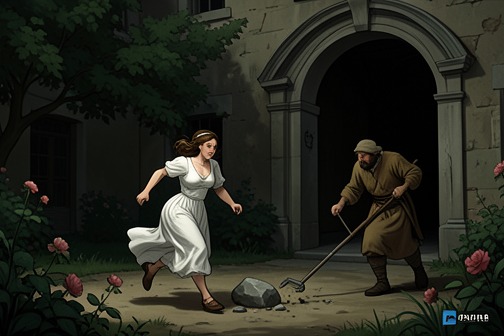
[Alice Gould](entity:character-recall-character-alice-gould-2e74f97e507b)’s escape and recapture expose the gulf between the asylum’s stated openness and the power it exercises over her. She slips beyond the grounds by exploiting a moment when she is out of sight, but her flight ends with a stone blow, a shepherd’s threat, and her return to confinement in the [Dementia Ward Known as the Lion Cage](entity:location-recall-location-565324b4175a).
## The Grounds and the Stakes
The escape follows a contradiction that has shaped Alice’s experience from admission. She insists that she entered of her own will as a professional detective, but the director tells her that her file records an involuntary admission: it contains a medical certification from [E. Donadío](entity:character-recall-character-e-donad-o-e8b7847189d3) and an application from her husband, [Heliodoro Almenara](entity:character-recall-character-heliodoro-almenara-b802ccaa3548). The legal status in her papers therefore conflicts with the identity and purpose she claims for herself.
That conflict plays out in a hospital that has adopted an open regime. Patients can move with relative freedom around the building and grounds, spend time in the bar or workshops, and, in some circumstances, travel by bus to nearby towns. Yet this general freedom has exceptions, and the institution retains the power to restrict movement and impose confinement. Earlier, [Montserrat Castell](entity:character-recall-character-montserrat-castell-e866aa901248) had helped Alice understand the hospital’s arrangements; now Alice asks her to help her escape and hide until [César Arellano](entity:character-recall-character-c-sar-arellano-1dd2ae49c986) returns.
The [Orange Pass Card](entity:object-recall-object-ee620014b909) becomes part of the immediate pressure. Montserrat warns that [Samuel Alvar](entity:character-recall-character-samuel-alvar-4a5f7bef80ea) will come looking for it if she does not deliver it within half an hour. Alice’s plan thus develops amid competing demands: she wants to leave, while the people around her expect her to remain within the hospital’s procedures and reach.
## Getting Beyond the Gate
Alice’s escape depends less on a direct confrontation than on carefully using what others assume she is doing. After the vehicle has driven away, she calls after it, although she knows the driver cannot hear her. The apparent outburst carries her beyond the gate and out of sight from inside the park. Her disappointment at the vehicle’s departure is genuine, but she turns that moment into cover for a change of position.
When a guard approaches to take the card, Alice uses his extended arm as leverage and throws him off balance. He is left stunned, then gets up sore and angry as she runs uphill. Once she passes the crest of the rise, she abruptly changes direction. The sequence makes the escape a brief reversal of institutional control: the guard approaches expecting compliance, but Alice uses the encounter to open a route away from him.
Her progress ends outside the grounds. After she has walked only a few steps, a stone strikes her left shoulder blade and knocks her face down. At first she thinks she has been shot; she then realizes that the blow came from a stone. A shepherd stands over her with a mastiff beside her face and threatens to crush her head if she moves. He calls for the [Guardia Civil](entity:organization-recall-organization-guardia-civil-268ba482c33f), announcing that he has caught the fleeing woman. Alice is in severe pain, and as evening darkens, the shock of recognizing where she is gives way to the knowledge that she has been caught.
## Return to the Lion Cage
Alice wakes back inside the hospital, where the pain of the stone is outweighed by despair at her location. The scene recalls an earlier, similarly piercing cry she heard soon after arriving, linking the return to the institution’s already familiar sounds and spaces. She is lying in a row of beds, with six others opposite; some are occupied and some empty. Women move naked between the beds, and Alice recognizes the patient known as the Gorilla Woman.
Alice discovers that her ankles, waist, and wrists are tied. Her anger at the restraints is sharpened by the fact that she has returned to a ward where she fears an attack and cannot defend herself. A nurse asks whether she will behave if released, and Alice reports that she is in great pain. The ward is identified as the women’s dementia unit directed by [Rosellini](entity:character-recall-character-rosellini-4798b44177f7), commonly called the Dementia Ward Known as the Lion Cage. The return is therefore not simply to the hospital but to a more restrictive part of it, with Alice physically bound among patients in acute distress.
## Institutional Conflict and Significance
The escape and recapture bring the asylum’s opposing realities into one sequence. The open regime permits movement around the grounds, but that permission does not amount to freedom from institutional authority: Alice can get outside only by deceiving a guard, and her departure ends in capture and restraint. The gate is both a practical boundary and the point at which an apparent liberty becomes a flight that the surrounding authorities can stop.
Rosellini responds to Alice’s confinement by telling her that he is willing to organize her escape, calling the treatment of her a grave wrong. Alice spends much of the afternoon conspiring with him. Their initial plan is to let the hospital believe she is being treated directly by Arellano until he returns, while a lawyer pursues legal steps to locate Heliodoro under the relevant provision of [Article 27 of the 1931 decree](entity:rule-recall-rule-1931-27-bb121b5410c5). The plan shows that Alice’s first escape does not resolve the dispute over her status; instead, it shifts resistance from a hurried dash across the grounds to a covert effort involving the hospital’s own staff and legal procedures.
The event’s central reversal is stark: Alice gets out of the gate, but not out of the system that has classified and confined her. The stone, the shepherd’s call, and the restraints mark the distance between movement and freedom, while Rosellini’s proposed assistance keeps open the possibility of another attempt—this time through concealment and legal action rather than speed alone.
Event 24
Alicia’s Transfer to the “Lions’ Den” Ward
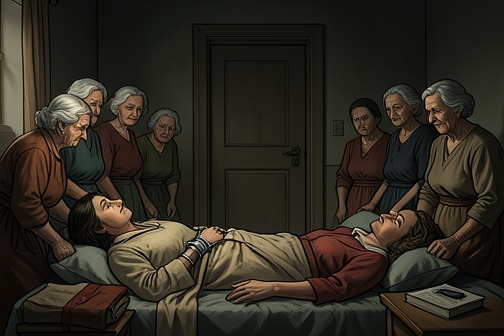
[Alicia’s Transfer to the “Lions’ Den” Ward](entity:event-recall-event-alicia-c9abde0ff91e) is the moment when [Alice Gould](entity:character-recall-character-alice-gould-2e74f97e507b)’s confinement becomes visible in its most coercive form: she wakes restrained in the women’s dementia unit, surrounded by patients who need constant care. The transfer sharply contradicts the asylum’s nominally open regime. It also forces a distinction between two competing forms of protection: the institution’s power to confine her and [Dr. Rosellini](entity:character-recall-character-dr-rosellini-1164e56c214a)’s effort to shelter her while working toward her legal freedom.
## From an Open Regime to a Locked Ward
The contrast begins with the hospital’s recent change to an open regime. [Montserrat Castell](entity:character-recall-character-montserrat-castell-e866aa901248) explains that residents may move with relative freedom through the building and park, gather in the bar, play cards, stroll in the garden, attend occupational therapy, or work in workshops. Some can even travel by bus to nearby villages. That freedom is qualified by many exceptions, however, and the hospital’s separate units make the limits tangible. The transfer into the women’s dementia ward is not simply a change of room: it removes Alice from the ordinary circulation she had come to associate with life in the hospital.
The institution has already treated her as a patient in practical ways. At admission, staff count her clothes and toiletries and seal the contents of her handbag and hand luggage. Yet Alice’s understanding of her status remains at odds with the paperwork: she insists that she entered voluntarily as a professional detective, while the director explains that the file follows the procedure for involuntary admission. It includes a medical certificate from [E. Donadío](entity:character-recall-character-e-donad-o-e8b7847189d3) and a request by her husband, [Heliodoro Almenara](entity:character-recall-character-heliodoro-almenara-b802ccaa3548). The later move into a more restrictive ward thus intensifies a conflict already embedded in her admission: Alice claims agency over why she is there, while institutional documents authorize others to decide where she must stay.
## Waking Among the Patients
Alice wakes abruptly with pain in her back from a stone blow and realizes where she has been placed. The first sounds are short, piercing cries from an elderly naked woman sitting on the edge of the bed. Alice remembers hearing a similar shriek shortly after her arrival, but now the sound belongs to the room around her. Six other beds form a row with hers, with six more opposite; some are occupied and some empty. Other women, also naked, move between them.
She recognizes the Woman Gorilla and understands that she could not defend herself if attacked: her ankles, waist, and wrists are tied. Anger follows the realization, and she identifies the director as the person with authority to order the restraints. Nearby, a small, soaked woman is covered with a towel and dried by a nurse; once released, she lies on the floor pretending to be dead. Two nurses lead away the Woman Gorilla and the woman who has been crying. The scene presents a ward in which care and control occur side by side: attendants wash, cover, move, and manage patients, while Alice herself remains physically bound.
The ward’s name points to a broader routine of dependency rather than to Alice alone. The [Dementia Ward Known as the Lion Cage](entity:location-recall-location-565324b4175a) contains patients whose needs may be so extensive that they must be dressed, fed, put to bed, and helped with toileting. Without that assistance, some cannot carry out those tasks; some smear themselves with their own waste or eat it. Against this background, Alice’s restraints are both a specific restriction imposed on her and part of a place organized around intensive supervision. Her awareness of the ward’s conditions does not make her one of its helpless patients, but being tied down makes the difference between observer and captive precarious.
## [Rosellini](entity:character-recall-character-rosellini-4798b44177f7)’s Intervention
Afterward, Alice is working at a cleaning task when Dr. Rosellini appears with an unusually grave expression and summons her to his office. He closes the door and tells her that he is willing, as a last resort, to organize her escape. He considers the treatment the director is preparing to impose a serious moral and clinical wrong. In his view, the case is especially troubling because Alice may be the victim of fraud, blackmail, or revenge, and because the director has chosen to begin a grave treatment while [César Arellano](entity:character-recall-character-c-sar-arellano-1dd2ae49c986), the doctor who has been attending her, is absent.
Rosellini does not present escape as his first course of action. He says he will initially try every available means to obtain Alice’s legal freedom and asks her to wait for Arellano’s return. He also warns that the director may be trying to drive her mad, though he tells her that this will not succeed. His response makes the ward a refuge as well as a site of confinement: he offers Alice books, magazines, and food, and urges her to regard the other patients as cases to be understood from outside rather than as companions whose condition she shares. But his protection has a limit. He refuses to let her leave his unit, arguing that she is safe there and that outside it he cannot answer for what might be done to her.
## A Confinement Recast as a Plan
The change in Alice’s circumstances produces a change in strategy. For much of the afternoon, she and Rosellini discuss a plan that she later improves. At first, they intend to let others believe that the head of the unit is treating her directly until Arellano returns. Meanwhile, a lawyer chosen by Alice will be allowed to enter Rosellini’s office discreetly and pursue the legal steps needed to locate Heliodoro Almenara. The plan uses the very enclosure that restricts Alice: Rosellini’s unit becomes the protected space from which they can begin challenging the legal basis of her confinement.
The transfer therefore does not resolve the question of whether Alice belongs in the hospital; it sharpens it. Her admission papers frame her as involuntary, her restraints make that status bodily immediate, and Rosellini’s opposition exposes disagreement inside the medical staff about the director’s actions. The episode’s central reversal is that the ward’s walls are at once evidence of the institution’s power and, for the moment, the boundary of a doctor’s attempted protection. Alice remains unable to leave, but she is no longer merely enduring the transfer: she is helping turn confinement into a legal and practical problem to be solved.
Event 25
The Anti-Alvar Campaign and the Director’s Resignation
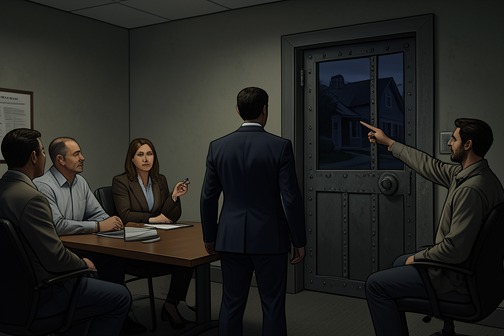
[The Anti-Alvar Campaign and the Director’s Resignation](entity:event-recall-event-alvar-997b9766c06b) bring a challenge to [Samuel Alvar](entity:character-recall-character-samuel-alvar-4a5f7bef80ea)’s authority into the open, turning complaints about the hospital into a struggle over [Alice Gould](entity:character-recall-character-alice-gould-2e74f97e507b)’s liberty and the facts surrounding [El Gnomo](entity:character-recall-character-el-gnomo-90ce0cb6f3e0)’s death. The doctors’ meeting produces a proposed resignation, but its sharpest confrontation is over whether Alice should be branded a murderer when the evidence cited in the room points to a different account.
## Building the Campaign
Alice Gould spends much of an afternoon conspiring with [Rosellini](entity:character-recall-character-rosellini-4798b44177f7). Their initial plan is to let it appear that she is being treated directly by the head of the unit until [César Arellano](entity:character-recall-character-c-sar-arellano-1dd2ae49c986) returns. In parallel, a lawyer chosen by Alice is to be allowed discreet access to Rosellini’s office and to handle the legal steps for locating [Heliodoro Almenara](entity:character-recall-character-heliodoro-almenara-b802ccaa3548). The plan invokes paragraph b of Article 27 of the decree, although the surviving account breaks off before explaining the provision’s full application. This legal maneuver sits alongside the campaign against Alvar: Alice is not only contesting her confinement through formal procedures but helping to prepare a challenge to the director’s position.
The case against Alvar is framed in institutional as well as personal terms. The effort seeks the doctors’ unanimous support for asking the Ministry of Health to transfer him. Alice points to suicides, escapes, drowned patients, and killings, as well as bars that have not been replaced with suitable windows. She also objects to being treated for an illness that, she says, no one has diagnosed. The list makes the campaign an indictment of the hospital’s safety and management, while her own confinement gives that indictment an immediate personal stake.
## Alvar’s Proposed Resignation
Addressing the doctors, Alvar acknowledges that a damaging document about him is circulating through the hospital. He objects both to its accusations and to its authorship: he says it was written by a patient and signed by physicians. Rather than simply answer the document, he asks the doctors to accept a transaction. They would replace the appeal to the Minister of Health with another document, drafted and signed by Alvar, in which he submits his resignation and asks for the former arrangement to be restored: the hospital’s doctors’ board would suggest a director for the minister to appoint.
The offer makes the meeting about more than whether Alvar remains in office. His departure is presented together with a proposed change to how future directors are selected. Yet the resignation does not settle the dispute that matters most to Alice. In the ensuing exchange, Arellano distinguishes Alvar’s personal decision to seek a transfer from the accusation he has made against a resident. The first, Arellano says, is not the decisive issue; leaving the charge of murder unresolved could affect whether Alice remains unlawfully confined or is released.
## The Dispute over El Gnomo’s Death
Alvar answers by accusing Alice of killing Celestino Expósito, a disabled resident whom he says she contemptuously called El Gnomo. Arellano does not endorse the charge. He calls Alvar’s account inaccurate and says he will rely on Alvar’s own statement to the court, a copy of which he possesses and can produce for the doctors. He also invokes the testimony of the sole eyewitness, [Cosme el Hortelano](entity:character-recall-character-cosme-el-hortelano-3709e2335790).
As Arellano recounts that testimony, El Gnomo was in the habit of running wildly in zigzags. On the occasion in question, he tripped during one of these runs and broke his malformed spine against a rock. Arellano offers to have Cosme called to repeat what he told the judge. The contrast is precise: Alvar states that Alice murdered El Gnomo; Arellano points to a judicial statement and eyewitness testimony describing a fatal accident. The meeting does not present the accusation as established fact, and Arellano’s intervention warns that repeating it may prolong Alice’s confinement.
## Departure and Aftermath
After declaring that he will not professionally commit himself to releasing a madwoman, Alvar walks toward the chapter-room door. His exit takes place in an impressive, uncomfortable silence. [Teodoro Ruipérez](entity:character-recall-character-teodoro-ruip-rez-ec534aa212cf), whom the account identifies as Alvar’s protégé, does not follow him. That detail leaves the director’s departure without the visible solidarity of his closest professional ally, even as the passage supplies no further account of the resignation’s formal processing.
The episode’s outcome is therefore both institutional and unresolved. Alvar’s proposed resignation offers a route away from the direct contest over the petition, but the meeting exposes the continuing consequences of his accusation: Alice’s freedom may depend on whether her sanity is confirmed and whether the charge against her is accepted or rejected. By placing a disputed death, a court statement, and a witness’s account at the center of a dispute over authority, the campaign makes the director’s judgment itself part of the case against him.
Event 26
Alicia Discovers Heliodoro’s Embezzlement and Begins Legal Separation
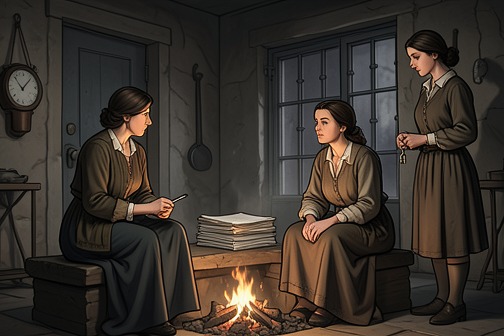
[Alice Gould](entity:character-recall-character-alice-gould-2e74f97e507b)’s discovery that [Heliodoro Almenara](entity:character-recall-character-heliodoro-almenara-b802ccaa3548) had appropriated two inheritances turns a private betrayal into a decision about how to leave a marriage. [María Luisa Fernández](entity:character-recall-character-mar-a-luisa-fern-nd-e4544979ebc0) lays out the sales and withdrawals, but Alice refuses to pursue her husband criminally. The encounter ends not with a promise of revenge but with signed papers for legal separation: Alice chooses to cut the remaining ties rather than make prosecution her form of redress.
## The concealed sale of the English houses
María Luisa begins with property Alice believes she still owns: two houses in England, inherited from her father. Alice recalls that the houses once produced some income and that she had sometimes suggested selling them. Heliodoro had opposed the idea, arguing that it would be unwise to part with property abroad. His objection had helped preserve Alice’s belief that the houses remained hers. María Luisa now tells her they were sold eight years earlier, a fact Alice says she did not know.
The transaction did not involve buyers paying Heliodoro directly. María Luisa explains that the money went into Alice and Heliodoro’s joint account, after which he withdrew it. That detail makes the concealment more intimate than a simple unauthorized sale: the proceeds entered an account bearing Alice’s name, yet she did not know either that the houses had been sold or that their value had passed through the shared account. The arrangement also helps explain why the loss had not announced itself to her as a straightforward disappearance of funds.
## A larger inheritance and a repeated method
The sale of the English houses proves to be a smaller precedent for a much greater appropriation. Alice says that [Obdulio Limón](entity:character-recall-character-obdulio-lim-n-f7fafe4aa523) had told her that her current accounts remained as she had left them, a report that deepened her confusion rather than resolving it. María Luisa distinguishes those accounts from a later, substantial deposit made in Alice’s name to the joint account. Heliodoro withdrew that money before twenty-four hours had passed, and María Luisa says there had been no further trace of him.
The source of the deposit is specific: it came from Thompson and Smith, a California law firm, as the proceeds of settling the estate of Harold Gould. Harold had left the inheritance entirely to Alice, his only heir. María Luisa says she has enough information to bring a case and asks Alice to sign a power of attorney so that proceedings can begin. What emerges is a repeated pattern with a marked difference in scale: the proceeds from Alice’s father’s houses were withdrawn from their joint account, and the much larger inheritance from her uncle was handled through that same shared account before Heliodoro took it.
## Alice refuses prosecution
Alice does not dispute the substance of María Luisa’s account, but she rejects the legal remedy being offered. She will not sign the authority to prosecute Heliodoro. Her refusal is not presented as ignorance of the loss: she says that she needs a coherent explanation for why she is in the hospital and wants to understand what has happened. Once María Luisa supplies the facts, however, knowing them does not make Alice willing to pursue her husband in court.
Alice interprets Heliodoro’s conduct through a bitterly qualified image: he has behaved like a generous bandit. He took the fortune left by Harold, she says, but partly spared the property inherited from her father. In her reasoning, he could have used the authority he possessed to sell all her properties, yet did not do so. That remaining property becomes, in Alice’s account, a grotesque gesture of generosity from a man who has robbed her. She therefore distinguishes recovering the truth from seeking retribution: she will not make her revenge consist of pursuing and harassing him.
## Separation as the chosen break
María Luisa challenges the practical consequences of that refusal. Alice had granted Heliodoro powers intended to let him sell a property in La Mancha; according to María Luisa, he used those powers as well to sell the London houses. Leaving the authority in force, she warns, would allow him to remain her heir and preserve a connection Alice has no reason to maintain. María Luisa accepts that Alice may prefer not to prosecute him, but proposes a different exchange: Alice’s decision not to denounce him in return for immediate legal separation and a future divorce.
The proposal turns Alice’s withdrawal from prosecution into a concrete act of separation. María Luisa says she will arrange the matter and asks Alice only to sign the papers. Alice accepts the contemptuous comparison María Luisa has made, reducing Heliodoro to a trivial speck of bird droppings, and signs. As she does so, she laments that they have no champagne at hand to celebrate. The gesture gives the scene its double edge: the losses remain real, but Alice treats the severing of the marital bond as a release worth marking. The immediate outcome is legal separation, with divorce still in the future; the decisive change is that Alice agrees to end the tie without agreeing to prosecute the man who betrayed her.
Event 27
Chemari Goñi’s Drowning in the Swimming Pool

[Chemari Goñi](entity:character-recall-character-chemari-go-i-770b4ce0fd88)’s drowning at the [Club Loreto](entity:location-recall-location-club-loreto-9257de2406f2) swimming pool became, for [Ignacio Urquieta](entity:character-recall-character-ignacio-urquieta-13fa5efbf25e), a death whose meaning surfaced only thirty years later. As a child, Ignacio heard that Chemari had drowned with his roller skates on and pushed away a terrible doubt about what had happened. Much later, the shock of being thrown into water as an adult made the childhood encounter return with a new and devastating implication: Ignacio came to believe that he had caused his schoolmate’s death.
## The Childhood Encounter and Its Cover Story
The episode belongs to Ignacio’s childhood, when he was five and known as [Iñaqui](entity:character-recall-character-i-aqui-44194aa70d4b). After an encounter with Chemari, Iñaqui ran home crying, wearing his raincoat and only his socks. He told his mother that, with time to spare before the early tram, he had gone to the harbor, approached children fishing below a small landing, slipped on moss, and fallen into the water. The account is explicitly presented as a lie, not as a reliable explanation of what had happened. Its details nevertheless establish that a childhood episode involving water preceded the later news of Chemari’s death.
The next day, Iñaqui walked to school to avoid meeting Chemari on the tram. The precaution proved unnecessary: Chemari, his companion in skipping school the day before, was absent too. Neither attended on the day the first-term grades were given, just before the Christmas holidays began. The narrative supplies this sequence of absences but does not establish what Chemari did during those days or how he came to be in the pool.
## The Body at Club Loreto
After the holidays, Iñaqui returned to school and learned that Chemari had drowned. Employees discovered his body at the bottom of the Club Loreto pool as they were preparing to empty it. Chemari still had his roller skates on, a striking physical detail that would persist in Ignacio’s later reconstruction of the death.
Iñaqui was horrified by the news, but the narration also says he did not grieve much because he had not liked Chemari. A terrible doubt briefly came to him, then he rejected it. He decided that the likeliest explanation was that Chemari had gone back to the club to skate during the days he was absent from school before the holidays. That conclusion gave the child a way to account for the death without confronting his own possible involvement; the account does not confirm that Chemari had actually returned to skate or settle how he drowned.
## The Memory Returns
For thirty years, Ignacio did not think about the episode again. The old memory returned when patients at the asylum threw him, fully dressed, into a swimming pool. The sensation of the incident brought back an earlier bodily experience so forcefully that he felt the present become the past: the pool seemed to be Club Loreto in [Bilbao](entity:location-recall-location-00ac960a262f), and the person who had pushed him seemed to be Chemari rather than Bocanegra. The scene connects the childhood death to the adult pool attack through Ignacio’s physical reaction, before his account turns into an explicit explanation.
Remembering Chemari’s body with the skates on, Ignacio joined the image of a drowned figure to the schoolmate he had lost. He wondered whether he had previously been told about the skates and had refused to take the information in. He then identified Chemari Goñi as the dead boy and became certain that he had been the one who killed him. This is Ignacio’s recovered conviction, not an independent confirmation of the mechanics or cause of Chemari’s drowning; uncertainty remains part of the revelation.
## Aftermath and Narrative Significance
Ignacio told the doctors what had come back to him, then repeated the account to [Alice Gould](entity:character-recall-character-alice-gould-2e74f97e507b) a few days later over lunch at Pepe el Tuerto’s Roast Grill. A large jug of water stood between them as a silent witness to his recovery. Both had received declarations of health that day and had decided to celebrate together. The setting makes the water that triggered Ignacio’s memory present again, now alongside his effort to tell what he had long forgotten.
The death thus changes significance across time. At first it is news of an absent schoolmate, met with shock, limited grief, and a quickly rejected doubt. Decades later, a repeated encounter with water reorganizes those scattered childhood details into a possible confession. The narrative reveals Ignacio’s certainty about his responsibility while preserving a distinction between that certainty and what can be established about Chemari’s final moments.
Event 28
Ignacio Urquieta’s Pool Attack and Recovery from Hydrophobia
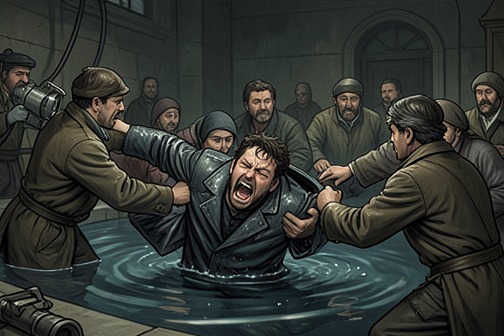
[Ignacio Urquieta](entity:character-recall-character-ignacio-urquieta-13fa5efbf25e)’s pool attack turns an act of cruelty into a sudden recovery. When fellow patients carry him to the water and throw him in, his terror first appears to confirm the severity of his hydrophobia; then his body begins swimming, and the plunge unlocks a buried childhood memory. The episode resolves the immediate fear while exposing a more painful truth: Ignacio connects his schoolmate [Chemari Goñi](entity:character-recall-character-chemari-go-i-770b4ce0fd88)’s drowning to his own actions and has not been able to face that connection until the pool makes the past present again.
## The Attack and Its Setting
The assault begins when a group of patients form a conspiracy against a man they regard as another patient pretending not to be mad. Six of them seize Ignacio from beside [Alice Gould](entity:character-recall-character-alice-gould-2e74f97e507b) and carry him toward the pool, intending to throw him into the water. Alice cries out to two nurses for help and runs toward the sports area, while Ignacio struggles in their arms with his eyes closed so he will not have to see the water. The scene makes clear that this is not a planned treatment: the patients’ action is cruel, and Alice tries to stop it.
Alice arrives in time to see them throw Ignacio, still dressed, into the pool. His cry is described as a howl of panic; the image makes the water seem to him like a place of imminent death. Two nurses remove their shoes and coats to rescue him, and Alice prepares to follow them. Before anyone can reach him, however, the body that had been thrashing in the water takes off its shoes, which sink to the bottom, and begins to swim slowly and rhythmically. His response changes the scene in an instant: the anticipated rescue becomes a stunned observation of a capacity he had believed fear made impossible.
## From Panic to Recognition
Ignacio reaches the opposite edge, turns, pushes off, and swims the length of the pool three times, then climbs out by the ladder. Alice and the nurses hurry to him. He does not answer Alice’s first question about whether he is all right; shortly afterward, he exclaims that he is cured, his voice carrying both astonishment and happiness. The recovery is therefore registered first as bodily action, before Ignacio can explain it. The calm, repeated lengths of the pool stand in sharp contrast to his helpless struggle moments earlier.
He describes the change as a sudden flash of understanding. Being thrown into the water while dressed produces a faint spell that feels identical to one he experienced as a child. In the instant of the fall, he imagines that the present has become the past: the asylum pool is the pool at [Club Loreto](entity:location-recall-location-club-loreto-9257de2406f2) in [Bilbao](entity:location-recall-location-00ac960a262f), he is five rather than thirty-six, and the person who pushed him is his schoolmate Chemari rather than [Carolo Bocanegra](entity:character-recall-character-carolo-bocanegra-61e3854f7d4b). The episode links the adult phobia to a specific remembered scene, not merely to water in the abstract.
## The Memory of Chemari Goñi
The recollection gathers around the figure Ignacio calls the Mutist and the image of a drowned boy weighted by large roller skates. Thinking of the Mutist drowned at the bottom of the pool leads Ignacio back to the memory of his dead classmate. He cannot establish whether anyone told him that Chemari drowned with the skates on, or whether he heard and refused to take it in. That uncertainty remains part of the account; what becomes newly certain to him is Chemari’s name and Ignacio’s own responsibility. He insists that the schoolmate was Chemari Goñi and that he himself killed him.
The restored memory does not arrive as a detached explanation delivered before the crisis. It erupts through the physical repetition of the childhood scene: a fall into water, a remembered shove, and the return of the boy’s death. Ignacio’s mind initially replaces the present assailant with the schoolmate, then connects that remembered push to the drowned child and to his own guilt. The episode gives the hydrophobia a history while preserving the disturbance of recognition: Ignacio can name what he believes happened, but his uncertainty about what he was told shows that the memory had been inaccessible or resisted.
## Aftermath and Significance
Ignacio later recounts the experience to the doctors and repeats it to Alice Gould over a large jug of water at Pepe el Tuerto’s Roast Grill. The jug serves as a silent witness to the recovery: water, which had organized his fear, is now present at the meal where he can tell the story. He and Alice have both received declarations of health on the same day and decide to celebrate together; their later lunch gives the private breakthrough a shared aftermath without diminishing its unsettling content.
The episode’s reversal is both physical and psychological. The patients intend to use the pool as an instrument of humiliation, and Alice initially sees a man in mortal danger; instead, Ignacio swims, and the assault breaks open the memory concealed behind his fear. His declaration of cure marks a decisive change, but the recalled death prevents the scene from becoming a simple triumph over a symptom. The water restores his ability to act while forcing him to confront the loss and responsibility he associates with Chemari Goñi’s drowning.
Event 29
Heliodoro Almenara’s Repeated Poisoning Episodes
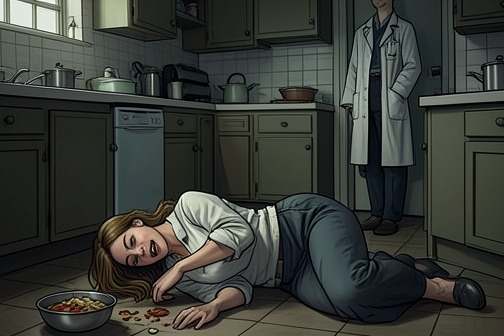
[Heliodoro Almenara](entity:character-recall-character-heliodoro-almenara-b802ccaa3548)’s repeated poisoning episodes turn an apparent domestic mishap into a pattern that reshapes how those around [Alice Gould](entity:character-recall-character-alice-gould-2e74f97e507b) interpret her. Each illness followed a meal she had prepared while the household servants were away; the recurrence prompted Heliodoro and a doctor to suspect her and quietly arrange for her to be watched. The account confirms the episodes and their consequences, but does not establish that Alice deliberately poisoned her husband.
## The First Collapse
On an evening when the servants were off, Alice prepared the food. When the maid and cook returned, they found Heliodoro on the kitchen floor, writhing in pain. The household called a doctor who lived in the adjoining apartment. After treating him, the doctor diagnosed food poisoning caused by food that had gone bad. The episode therefore began with a clinical explanation, not a proven accusation: Heliodoro was gravely unwell, but the stated cause was spoiled food.
## Recurrence and Suspicion
The illness did not remain a single incident. It happened three more times, always on days when the maid and cook were away and Alice had prepared the meal. That repeated circumstance gave the episodes a pattern, and the pattern changed their meaning. What could initially be taken for accidental food spoilage now seemed suspicious to both Heliodoro and the doctor. Heliodoro concluded that Alice was trying to poison him; the doctor and husband agreed that he should visit the couple every day, ostensibly because of Heliodoro’s recurring stomach complaints, so that he could observe Alice.
The servants’ departure followed the accusation. When they heard Heliodoro say that his wife was trying to poison him, they resigned and thereafter heard nothing more from either spouse. Their account thus supplies both the household’s practical response and a limit on what they could know: they witnessed the repeated illnesses and heard the charge, but vanished from the couple’s lives before its truth or consequences were settled for them.
## Observation and Domestic Unease
The doctor’s daily visits gave the suspicion a continuing presence in the home. His stated pretext was Heliodoro’s stomach trouble, but his purpose also included studying Alice. She found his attentiveness oppressive: she resented how often he came, the questions he put to her, and the way he searched her eyes. The arrangement turned the domestic space into a place of scrutiny. Even without a demonstrated act of poisoning, Alice’s ordinary interactions with the doctor became charged by the suspicion that had grown out of the recurring illnesses.
## Retrospective Significance
The episodes are recounted retrospectively by [María Luisa Fernández](entity:character-recall-character-mar-a-luisa-fern-nd-e4544979ebc0), who affirms that the history of the poisonings was real. That confirmation concerns the existence of the repeated illnesses; it does not, by itself, settle whether Alice caused them intentionally. The distinction matters: the doctor’s initial diagnosis attributed the first attack to bad food, while the later pattern led Heliodoro and the doctor toward a more ominous explanation. The account preserves both the reported events and the uncertainty surrounding their cause.
As part of Alice’s wider story, the repeated attacks help explain why the people around her began treating her as an object of clinical suspicion. A husband’s accusation and a doctor’s covert observation emerged from the same sequence of meals and illnesses, so the boundary between care and investigation became difficult to separate. The event’s decisive consequence is therefore not a resolved verdict about guilt, but the creation of a domestic narrative in which Alice is watched and interpreted through the possibility that she tried to kill her husband.
Event 30
Alice Gould’s Admission to Fuentecilla Asylum
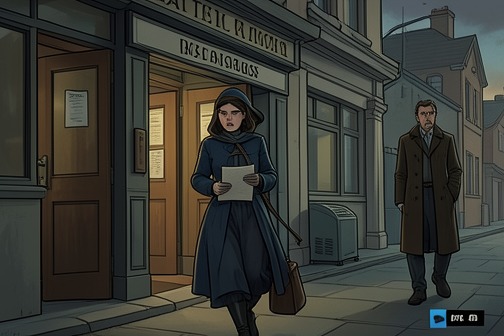
[Alice Gould](entity:character-recall-character-alice-gould-2e74f97e507b)’s admission to Fuentecilla Asylum is the hinge between an investigation Alice believes she has chosen and an involuntary hospitalization she does not understand as such. She thinks she is entering as a detective, equipped with a planned disguise; the later account reveals that her investigative purpose has grown within a genuine paranoid delusion, and that the documents governing her confinement do not match her belief that she is acting freely.
## The imagined investigation and the plan to enter
Alice’s plan develops around criminal letters that she believes came from the asylum and concern the case entrusted to her by [Raimundo García del Olmo](entity:character-recall-character-raimundo-garc-a-del-377ec83dea17). Her account of how the plan formed is itself unstable: she repeatedly describes meetings with [Enrique Donadío](entity:character-recall-character-enrique-donad-o-4c350e8a9654) as if they had taken place the previous day, while believing she is speaking to Raimundo. During visits to Alice at home, Donadío hears her refer to those imagined meetings and sees her story grow more elaborate. In one conversation, she tells him that she has discovered the letters came from the asylum.
The idea of investigating inside the institution then becomes part of the same developing narrative. Alice accepts the proposal that she enter as though she were a patient. She settles on pure paranoia as the condition to imitate, studies psychiatric treatises, and prepares by learning about its symptoms and forms. In her understanding, the plan is a professional stratagem: the asylum is the place where the mystery must be solved, and a convincing performance is the means of gaining access.
The admission is bound up with paperwork as well as performance. Alice believes that the suitable route is a request from her husband, [Heliodoro Almenara](entity:character-recall-character-heliodoro-almenara-b802ccaa3548), together with a doctor’s recommendation for confinement. She is willing to obtain Heliodoro’s signature without his knowing what he is signing. In her account, this procedure is a tool she can use to enter under cover; its actual legal effect will be the opposite of the freedom she imagines.
## The people around the admission
Enrique Donadío’s part in the admission turns on a divide between what Alice thinks is happening and what he believes. He has come to care for her and has concluded that her paranoia is real. At the same time, he feels profound pity at the prospect of bringing her into the hospital by force, deceived and against her will. Rather than directly shatter her account, he goes along with her belief that she is pretending to be paranoid and accepts her entry into the asylum. The arrangement allows Alice to approach hospitalization as an investigation even as Donadío sees a patient who needs treatment.
Heliodoro is involved in the formal route to admission, but Alice does not understand the arrangement as the other participants do. The later discussion establishes that she told him she was going to [Buenos Aires](entity:location-recall-location-buenos-aires-f4be140f43ae); on that point, she had always told the truth. The detail sits uneasily beside her larger plan: she prepares for an asylum admission without recognizing how the request made in her husband’s name will shape her ability to leave.
When Alice arrives, Donadío accompanies her. In the account of her condition, this fact becomes especially revealing: in the midst of her delusion, she mistakes the doctor for her client. The person physically escorting her to the institution is therefore not the person she believes she is meeting. The scene exposes the distance between her confidence in a detective’s assignment and the confused identities through which she interprets events.
## The admission’s legal and institutional meaning
Alice later protests that she is not a patient, that she entered of her own free will, and that she is a professional detective. The director answers by distinguishing the admission she believes she made from the one recorded in her file. A voluntary admission, he explains, would have required Alice’s signed declaration that she wished to be treated and a certificate from [Teodoro Ruipérez](entity:character-recall-character-teodoro-ruip-rez-ec534aa212cf), the doctor who received her. Instead, the file follows the procedures for involuntary confinement: a medical certificate from Donadío stating that she was ill and needed hospitalization, and a request from her husband as her relative.
That distinction changes the practical meaning of entering the asylum. Alice later reasons that voluntary admission would allow a patient to leave almost as easily as she had entered. Confinement requested by a family member on medical recommendation does not offer that same freedom: departure is no longer hers to decide at will. The documents thus turn what Alice understands as a chosen cover into a process with consequences she has not anticipated.
Fuentecilla’s open regime complicates, but does not erase, this restriction. [Montserrat Castell](entity:character-recall-character-montserrat-castell-e866aa901248) explains that patients can move with relative freedom through the building and grounds, spend time in the bar, play cards, walk in the garden or hills, attend occupational therapy, and work in workshops where they earn wages according to their abilities and output. Some patients can even travel by bus to nearby towns. This visible latitude helps explain how admission may initially resemble access to a world Alice can investigate. Yet freedom of movement inside an institution is not the same as the legal freedom to leave it.
## The reversal and its significance
The later reconstruction makes the admission more than a covert investigation gone wrong. Alice’s belief that she is simulating paranoia and Donadío’s conclusion that she has real paranoia coexist around the same plan. He lets her proceed toward the asylum under the story she has constructed, while arranging for her to enter under a medical and family-authorized process. Her supposed disguise is therefore inseparable from the illness it is meant to conceal.
The episode also recasts the apparent clarity of Alice’s professional objective. She does enter the asylum, and she does understand that she is going there to resolve a mystery, but the reasons she gives herself are shaped by delusion. The later disclosures make the reader reconsider the boundary between purposeful action and impaired interpretation: Alice’s plan has a recognizable logic, yet its premises, identities, and understanding of consent are compromised. Her admission is the point at which those two accounts meet—in the institution she thinks she has chosen, under terms she does not know she has accepted.
Event 31
Heliodoro Almenara’s Embezzlement of Alice Gould’s Property
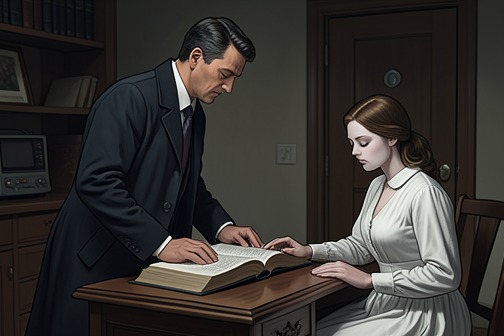
[Heliodoro Almenara](entity:character-recall-character-heliodoro-almenara-b802ccaa3548)’s embezzlement of [Alice Gould](entity:character-recall-character-alice-gould-2e74f97e507b)’s property turns the apparent domestic breakdown of their marriage into a deliberate financial scheme. The disclosures made by [María Luisa Fernández](entity:character-recall-character-mar-a-luisa-fern-nd-e4544979ebc0) connect the sale of family property, the appropriation of Alice’s inheritance, and her confinement in the asylum: private trust gave Heliodoro access to assets, while institutional custody helped him keep Alice from protecting them.
## The property sales
María Luisa traced the trouble to the year before her account. Among the couple’s friends, it was widely known that Heliodoro lived at Alice’s expense and was gradually taking possession of what she owned. One transaction began with Alice’s authorization: Heliodoro sold a property she had in La Mancha. Alice never received a cent from that sale.
The authorization did not remain confined to the land transaction. Heliodoro used the powers granted for that sale to dispose of two houses Alice owned in England. One was the house in which her father had been born. The gap between the limited authority Alice had given and the properties Heliodoro sold makes the method concrete: the apparent legitimacy of one transaction supplied cover for a much larger appropriation.
## A marriage marked by apparent indifference
Alice’s response, as María Luisa described it, was not to pursue a remedy. She separated the couple’s bank accounts and bedrooms, but took no further action. Heliodoro then failed even to occupy the bedroom alone: he turned it into a place for bacchanalian parties, held only a short distance from the room where Alice slept.
The servants’ account made Alice’s passivity seem more disturbing than ordinary coldness. They described her indifference to the humiliations as abnormal, but María Luisa rejected pride, reserve, and deliberate unconcern as explanations. Alice seemed instead not to know what was happening around her. That distinction gives the financial abuse its personal and practical force: the assets were being taken while the person most directly affected appeared unable, or unwilling, to register the surrounding violations.
## Confinement and the inheritance
At the doctors’ meeting, María Luisa identified a further step in the scheme. Heliodoro had forged Alice’s signature and, taking advantage of her confinement in the hospital, appropriated an inheritance that belonged only to her. The revelation reframed the asylum admission as more than a medical decision: while Alice was detained, her husband could act against her property with reduced risk of interruption from her.
The testimony also explained why Heliodoro chose this course rather than bringing the accusations against Alice before a judge. Asked why he had not prosecuted her after three attempted poisonings, María Luisa argued that a court would have discovered his earlier forgery concerning her English properties. In that situation, Alice would have been assigned a judicial guardian, rather than Heliodoro gaining control of her assets. Such scrutiny would have blocked his real objective: taking the inheritance from Harold Gould that was due to Alice.
## The scheme exposed
María Luisa described the asylum route as the simpler procedure: an application for Alice’s admission, accompanied by [E. Donadío](entity:character-recall-character-e-donad-o-e8b7847189d3)’s provisional diagnosis. At the meeting, she also identified Heliodoro as having fled Spain after taking the inheritance. The sequence links financial fraud to the institutions meant to adjudicate and care for Alice: the earlier misuse of a sale authorization and the later forgery were exposed only when her case was reconsidered by the hospital’s doctors.
The disclosure altered the meaning of the couple’s domestic arrangements and of Alice’s apparent inaction. The separated accounts and bedrooms had not stopped the taking of her property; nor had her admission merely placed her under medical observation. In María Luisa’s account, Heliodoro’s exploitation depended on both access and absence: access acquired through Alice’s authorization and forged signature, and absence secured while she was confined. The theft therefore stands at the intersection of marital betrayal and institutional vulnerability, making the question of Alice’s health inseparable from the question of who had profited from her detention.
Event 32
Maria Luisa Fernández Reveals Alice Gould’s True Medical History
[María Luisa Fernández](entity:character-recall-character-mar-a-luisa-fern-nd-e4544979ebc0)’s disclosure overturns the apparent detective story that has governed the doctors’ understanding of [Alice Gould](entity:character-recall-character-alice-gould-2e74f97e507b)’s admission: Alice’s belief that she entered the asylum to investigate a murder is, María Luisa insists, a delusion she experiences as fact. At the same time, María Luisa confirms a real betrayal beneath that false account: [Heliodoro Almenara](entity:character-recall-character-heliodoro-almenara-b802ccaa3548) forged Alice’s signature and appropriated the inheritance that belonged to her. The revelation arrives at the very moment Alice appears to be leaving the hospital, making the meeting not only an explanation of her past but an urgent challenge to what the doctors should do next.
## An urgent visit to the old office
María Luisa travels from [Madrid](entity:location-recall-location-madrid-8acd4123f416) intending to see the director urgently. On learning that Alice is already with her, she does not announce her arrival; instead, she waits until Alice has left the room that had formerly been [Samuel Alvar](entity:character-recall-character-samuel-alvar-4a5f7bef80ea)’s office. Her decision creates a pointed separation between Alice’s own account and the evidence María Luisa has come to present. She enters apologetically, but says at once that what she has to disclose is serious.
The timing sharpens that seriousness. [Dolores Bernardos](entity:character-recall-character-dolores-bernardos-7f2d2baa22fa) has arranged for the doctors’ meeting to take place in her office rather than its usual location because an outsider to the hospital’s psychiatric staff will be present. María Luisa is not another patient reporting what she has heard: she was commissioned by Alice to investigate the many unclear circumstances surrounding her case. The doctors are therefore asked to hear both the conclusions of that inquiry and the distinction it reveals between Alice’s sincerely held explanation and events that can be established independently.
## The investigation Alice believed she was conducting
María Luisa’s central correction is that Alice’s reasons for believing she was admitted to investigate a crime were false, even though Alice herself believed them completely. Alice also believed that the director was helping her. When he did not act in the way she expected, she constructed an explanation in which Samuel Alvar had abandoned her out of cowardice, afraid of the consequences of their supposed commitments. In María Luisa’s account, this was not a hidden pact exposed by investigation but another invention within Alice’s delusional interpretation.
The account becomes more elaborate after Alice is confronted with [Raimundo García del Olmo](entity:character-recall-character-raimundo-garc-a-del-377ec83dea17). She then recognizes, according to María Luisa, that the director had not been complicit either in her confinement or in abandoning promises to her. Alice responds by inventing an impostor García del Olmo, whom she casts as the real kidnapper. María Luisa tells the doctors that neither this supposed impostor nor the genuine García del Olmo had ever been part of Alice’s life. The case’s apparent chain of conspirators thus collapses: the people Alice had assigned roles in her imagined abduction were not agents in the plot she believed she was uncovering.
The reversal does not mean that every suspicion behind Alice’s distress was groundless. María Luisa separates Alice’s false explanation of her admission from the documented appropriation of her property. Having learned that Heliodoro had taken the fortune inherited from Harold Gould, Alice reasoned that the man she regarded as the false García del Olmo must have been Almenara’s accomplice. María Luisa rejects that connection: Heliodoro acted without anyone else’s complicity or assistance. A real financial crime had become entangled in Alice’s imagined kidnapping narrative, making the truth harder, not easier, to sort from the delusion.
## The verified fraud and the unsettled question of poisoning
María Luisa’s investigation establishes a concrete wrong behind the marital crisis. Heliodoro forged his wife’s signature and, taking advantage of her confinement, seized an inheritance that belonged to her. He has since fled Spain. These findings also throw Alice’s admission into a sharper legal light: the account of her involuntary entry describes medical certification that she was ill and required hospitalization, together with a request for admission submitted by her husband. The fraud against her and the procedure by which she was confined are related circumstances, but they do not prove the conspiracy Alice imagined.
The meeting also carries the disturbing background of Heliodoro’s illnesses. On one occasion, Alice and another woman returned from an outing to find him writhing on the kitchen floor in pain. A doctor living next door treated him and diagnosed illness caused by food that had spoiled. That episode does not, by itself, establish that Alice poisoned him; the disclosure instead shows how readily the evidence around the marriage could invite a more sinister interpretation. At the meeting, [Rosellini](entity:character-recall-character-rosellini-4798b44177f7) understands María Luisa’s report to mean that the woman he had tried to protect is an envenomator as well as a disturbed patient. His response reveals the emotional cost of revising his belief in her, not independent proof of what happened to Heliodoro.
## A discharge decision interrupted
The report reaches the doctors after they have signed eight or ten declarations of health in recent days. Alice’s case has already caused them particular unease, and Dolores Bernardos introduces María Luisa’s testimony as a reason they may need to reconsider some of those declarations. The revelation is therefore not a retrospective account detached from consequences: it arrives while Alice’s fitness for discharge is still an active institutional decision.
Indeed, Alice has spent that same day carrying a duplicate of her declaration of health from one hospital unit to another, saying goodbye to the residents. They embrace her, wish her happiness in her new life, and promise to visit. Against this scene of departure, the doctors hear María Luisa repeat her findings point by point. The contrast makes the timing almost unbearable: the community has already begun to treat Alice’s release as settled, while the committee is only now confronting an account that unsettles its confidence.
Rosellini breaks down and cries when he understands the implications of the testimony. He had regarded Alice as someone under his protection, threatened by the former director’s persecution and hatred; now he hears that she is both an envenomator and a disturbed woman. He leaves the room to compose himself, returns, and says nothing more. His silence registers the abrupt distance between the person he thought he was saving and the person María Luisa’s evidence forces him to see.
## A change in how the story can be read
The disclosure reorganizes the reader’s understanding without erasing the facts that made Alice’s suspicions plausible to her. Her account has the form of an investigation—with a crime, a director’s complicity, an abandonment, and a kidnapper—but María Luisa’s findings divide that narrative into imagined connections and independently verified wrongdoing. Heliodoro’s fraud is real; the network Alice constructs around her confinement is not. The distinction is crucial because dismissing the imagined plot does not make the actual exploitation disappear.
The event also exposes the danger of treating a declaration of health as the final word before hearing relevant evidence. Alice has a copy of the document and has already taken leave of the people around her, yet María Luisa’s arrival forces the doctors to revisit the case. Her testimony does not simply replace one complete story with another: it compels the hospital to hold together Alice’s delusional account, the real appropriation of her inheritance, and the unresolved meaning of her conduct. The revelation’s force lies in that separation—and in how late it comes.
Event 33
Doctors’ Committee Unanimously Upholds Alice Gould’s Discharge
The doctors’ committee’s decision to uphold [Alice Gould](entity:character-recall-character-alice-gould-2e74f97e507b)’s discharge resolves the immediate question of whether she may leave the sanatorium, but it does not resolve the contradiction at the heart of her case. The committee unanimously allows her freedom after hearing [María Luisa Fernández](entity:character-recall-character-mar-a-luisa-fern-nd-e4544979ebc0)’s account, even though the members know Alice is ill. Its final vote distinguishes a patient’s liberty from a declaration that she is entirely well—and turns a seemingly simple ballot into a measure of how difficult it is to judge her.
## The question before the committee
The vote comes after the committee has heard María Luisa Fernández relate the truth about Alice’s condition. [César Arellano](entity:character-recall-character-c-sar-arellano-1dd2ae49c986) has already concluded that Alice can be released without danger to herself or others and return home; medical observation there may be recommended, but is not a condition of her freedom. [Dolores Bernardos](entity:character-recall-character-dolores-bernardos-7f2d2baa22fa) supports a collective decision, yet insists that a majority is not enough after hearing the account. The issue is whether the certificate of mental health already given to Alice should be withdrawn.
That question has a procedural history. Alice believes she entered voluntarily and tells [Samuel Alvar](entity:character-recall-character-samuel-alvar-4a5f7bef80ea) that she came of her own accord as a professional detective, not as his patient. Alvar answers by pointing to the file: rather than the signed request and admission certificate associated with voluntary treatment, it records the procedures for involuntary admission. The papers include a medical certificate from [E. Donadío](entity:character-recall-character-e-donad-o-e8b7847189d3) and an application by Alice’s husband, [Heliodoro Almenara](entity:character-recall-character-heliodoro-almenara-b802ccaa3548). Alice’s conviction that she chose to enter therefore collides with the institutional record that gives others authority over her confinement.
The distinction matters beyond the paperwork. Alice reasons that a voluntary patient can leave almost as readily as she entered, whereas release after a family request and medical recommendation is not hers to decide alone. Alvar likewise frames her admission as a response to an alleged illness and a commitment by the hospital to try to cure her. The committee’s decision must consequently do more than assess a diagnosis: it must decide whether the hospital’s authority to detain her still stands.
## A case argued through competing accounts
Alice has repeatedly challenged the hospital’s interpretation of her story. When Alvar questions her as a patient, she is stunned by his refusal to acknowledge her account of herself as a detective. At the doctors’ meeting, she says she can prove that the other part of her story is true and that she wrote the letter at issue. The dispute is not merely over whether she has symptoms; it is also over whether her explanations count as evidence or are dismissed as symptoms because they come from a patient.
Her investigative role gives that conflict a concrete form. In a police inquiry, a commissioner asks her to dictate what she observed and deduced from the dead. The episode establishes Alice as someone who claims to reason from evidence, while the asylum’s file identifies her through a diagnosis and the allegation that she tried three times to poison her husband. At the committee meeting, those descriptions remain in tension: her account is not automatically vindicated, but neither can the medical record alone settle what happened.
A question raised by [José Muescas](entity:character-recall-character-jos-muescas-58ea8e606d57) further complicates the allegation against Heliodoro. If he had truly been the victim of three attempted poisonings, Muescas asks, why did he not report Alice to a judge? He suggests that Heliodoro might instead have wanted control over her property by becoming her legal guardian. This is presented as a suspicion about his interests, not as a finding by the committee. Its relevance is procedural as well as personal: the request that helped place Alice in the hospital came from the very husband whose conduct is under scrutiny.
## The ballot and its reversal
Bernardos asks for a decision by secret ballot. The doctors are instructed not to sign their slips and to return them folded. The choice is framed in practical terms: those who think Alice should be allowed to leave are to mark yes; those who think she should remain are to mark NO. The procedure is designed to prevent a signed vote from exposing an individual doctor’s position, while Bernardos’s insistence on unanimity makes every response consequential.
The count appears to produce one NO among the yes votes. The doctor who cast it immediately objects to the apparent meaning of his ballot. He explains that he meant not to withdraw the certificate already given to Alice, and that he wants her to be free. His answer reveals that the negative mark was directed at the proposal to revoke her status, not at her release. The apparent dissent therefore becomes agreement: the committee’s members all support leaving the certificate in force and allowing Alice to go.
The wording of the decision preserves a distinction the proceedings have struggled to maintain. The committee declares Alice mentally sound for the purpose of release, but the narration notes that everyone knew, whether they admitted it or not, that she was ill. The unanimity is thus not a unanimous denial of illness. It is agreement that illness does not, in this case, justify continuing her confinement or undoing the certificate that permits her to leave.
## Consequence and significance
The result gives institutional force to Arellano’s conclusion that Alice can be released without danger. Her return home remains compatible with possible medical observation, but the hospital cannot treat observation as a reason to keep her inside. In practical terms, the decision ends the committee’s immediate review of her liberty; in dramatic terms, it closes the confrontation between Alice’s insistence on her own account and the authority of the hospital’s diagnosis and admission file.
The scene’s final irony lies in the vote’s two meanings. The committee formally declares a resident mentally sound, while its members know she is not simply well; the lone NO, which seems to threaten her freedom, proves on clarification to protect it. The decision settles what the hospital will do, not every uncertainty about Alice’s condition or her competing account of events. Its unanimity is therefore both decisive and limited: she may leave, while the question of what her story means remains open.
Event 34
Alice Gould Returns to Fuentecilla After Leaving
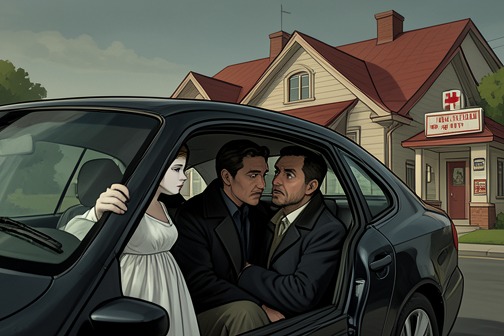
[Alice Gould](entity:character-recall-character-alice-gould-2e74f97e507b)’s return to Fuentecilla reverses her departure from the hospital and reveals how deeply her sense of home has shifted. On the road away, the prospect of life beyond its walls overwhelms her; once the car turns back, her physical distress recedes. Approaching the hospital, she no longer thinks chiefly of the deception that brought her there. Her attention turns instead to the residents and workers she loves, and to a future she imagines building inside the institution.
## Departure and the problem of admission
The return acquires an added irony from the way Alice first entered the hospital. On arrival, she insisted that she was a professional detective and had come of her own free will. The director, however, explained that her file recorded an involuntary admission: a medical certificate from [E. Donadío](entity:character-recall-character-e-donad-o-e8b7847189d3) declaring that she was ill and needed to be confined, together with a request from her husband, [Heliodoro Almenara](entity:character-recall-character-heliodoro-almenara-b802ccaa3548). Her later return is therefore not a simple resumption of a freely chosen stay. It follows an admission whose official paperwork contradicted the account Alice gave of herself, and a departure that exposes how little she can bear the life outside.
The hospital has also become familiar through its open regime. [Montserrat Castell](entity:character-recall-character-montserrat-castell-e866aa901248) described how residents could move around the building and grounds, spend time in the bar, play games, join occupational therapy, work in workshops for wages, or sometimes travel by bus to nearby villages. This limited freedom helps explain the force of Alice’s attachment: Fuentecilla is an institution, but within it she has found routines, work, companionship, and a community. Her return is not simply a retreat into locked confinement; it is a choice to return to the world in which her relationships and purposes have taken shape.
## The road back
The taxi driver repeatedly checks whether Alice is well. As the car travels away from Fuentecilla, the landscape opens toward the mountains visible from Villacastín, and beyond them toward [Madrid](entity:location-recall-location-madrid-8acd4123f416). Instead of offering relief, the view intensifies her dread. She imagines the distant city and the empty home waiting there, along with a future of social visits and tea gatherings among women living alone or abandoned by their husbands. The prospect makes her nauseated; she touches her face and hands and finds that she has a high fever.
Alice asks the driver to stop. Although he urges her to see a doctor, she insists that they turn around and go back to where they started. The change in direction brings an immediate bodily reversal. As the car heads toward [La Fuentecilla](entity:location-recall-location-la-fuentecilla-732453ab8517), the weight troubling her eases, her nausea disappears, and her fever falls until it is gone. The narration connects this response to [Mal yatrógeno](entity:concept-recall-concept-mal-yatr-geno-98cb532259fc), the hospital-dependence condition [César Arellano](entity:character-recall-character-c-sar-arellano-1dd2ae49c986) had explained to her, and places her alongside [Cosme el Hortelano](entity:character-recall-character-cosme-el-hortelano-3709e2335790) and [el Albaricoque](entity:character-recall-character-el-albaricoque-8e17eaae2ab4), who also suffer from a fear of distance or pathological dependence on the hospital. The return is thus both a deliberate decision and an episode in which emotional attachment registers physically.
## What she finds at Fuentecilla
As the hospital comes into view, Alice looks at its immense walls and complicated architecture, a mixture of styles. She briefly wonders who devised the scheme that had got her confined and how much Heliodoro paid the elegant rogue who acted in it. She is certain that Heliodoro lacks the ingenuity to have planned the deception himself. Yet the suspicion no longer governs her sense of where she belongs. Heliodoro feels emotionally more distant than the miles separating them, while the people inside the hospital are close to her sight and heart.
Her thoughts move through a particular circle of residents. She wants to teach the little [Rómulo](entity:character-recall-character-r-mulo-de5c3d33411a) a trade and hopes to communicate with the [Niña Péndulo](entity:character-recall-character-ni-a-p-ndulo-777e9d47570a) and make her smile. She has visited [Teresiña Carballeira](entity:character-recall-character-teresi-a-carballeir-66e3c6b388c9)’s embroidery workshop. Cosme el Hortelano binds her through gratitude and shared hopes; Alice is considering following his example by leaving all her property to the hospital. She also thinks of residents who deserve care or comfort, including [Luis Ortiz](entity:character-recall-character-luis-ortiz-ad870d93ed63), and of Candelas, whose longstanding punishment she believes ought to end. Her attention to these distinct people makes her imagined home concrete: it consists not of a general feeling of belonging but of relationships, work, and responsibilities.
## A chosen future, not a completed arrival
Alice imagines staying at Fuentecilla and working there for the rest of her life. If César Arellano allows it, she will study medicine. The ambition follows her encounters with the hospital’s patients and with the people who work to relieve their suffering. It also resonates with Arellano’s defense of reform: he recognizes the value of criticism of old hospital systems and of removing oppressive bars, while warning that reform requires an adequate infrastructure. Alice’s imagined future belongs to this lived institution, not to an abstract promise that simply removing its boundaries would solve everything.
For a moment, she lets the fantasy carry her as far as becoming director of the hospital, then recognizes that she is being swept up in reverie. She tells Terencio to complete the journey and closes her eyes. The sound of the tires changes as the car passes from paved road onto unpaved ground; outside, the silence is immense, while her attention settles on the road’s sounds and the eager beat of her heart. The ending holds a small but decisive tension: she has chosen the return and can picture a life there, yet the scene closes while the journey is still under way. Fuentecilla has become the destination of her desire before the narrative confirms her arrival inside it.